Is Snorkeling in Roatán Safe?
Sharks are the thing people ask about and sunburn is the thing that ruins their day, so here is the honest ranking of what can actually go wrong snorkelling on Roatan's reef.
Booking Choice: Choose a guided reef outing that suits your swimming ability. Explore Shipwreck, Starfish And Blue Channel ↗
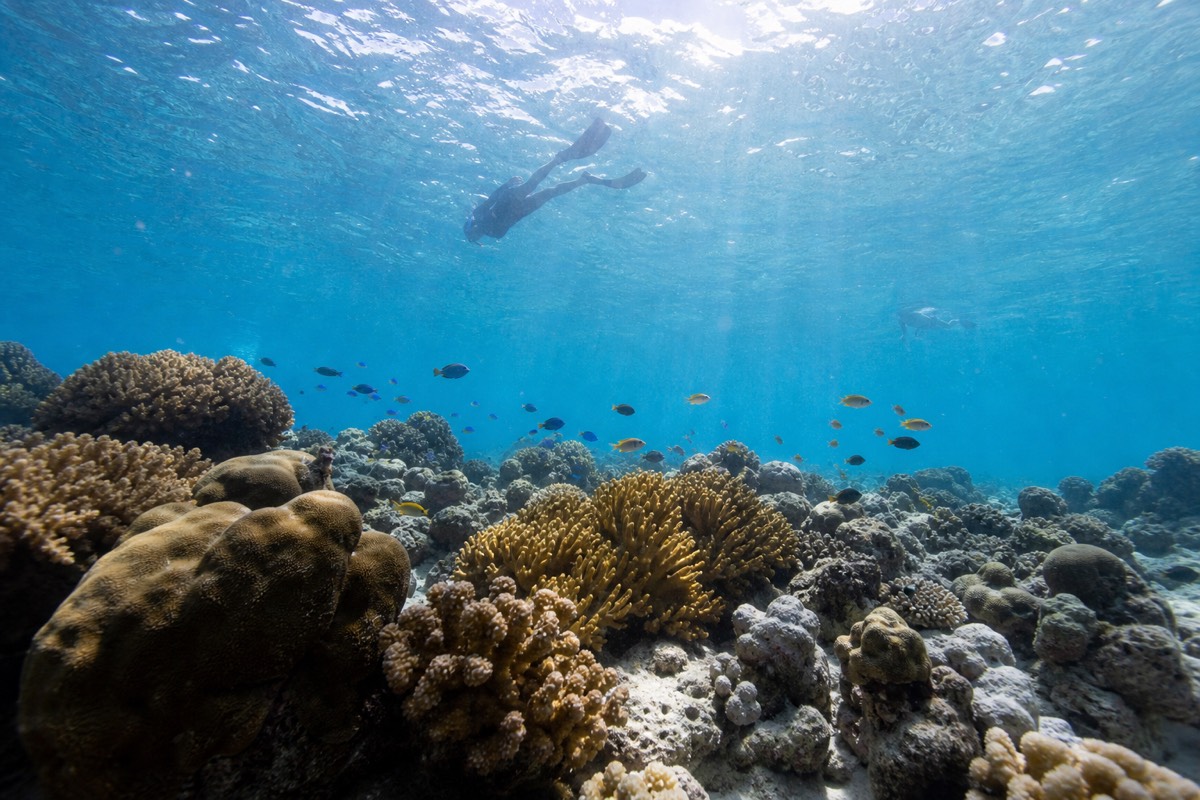
Is snorkeling in Roatan safe for an average swimmer?
Yes, for anyone who can swim comfortably in open water. Roatán's reef is shallow close to shore, the operators supply vests and flotation, and West Bay can be snorkelled by standing up whenever you like. The real risks are sun, dehydration, current at the wall edge, boat traffic and touching things you should not touch.
Nobody arrives worried about sunburn. They arrive worried about sharks, and sharks are the least of it. Sharks do turn up in the water column just beyond the wall edge, occasionally, and they are a sighting rather than an incident. The things that actually end snorkelling days here are dull: a swimmer who overestimated their stamina, a scraped shin from reef contact, and heat exhaustion in 33C with high humidity.
What actually goes wrong, and how often?
Ranked by how often it affects a visitor's day rather than by how frightening it sounds: sun and heat first, then fatigue from overestimating your swimming, then cuts and stings from touching the reef, then current at the shelf edge, then boat traffic. Marine animal encounters come last by a wide margin.
| Risk | Where it bites | What actually prevents it |
|---|---|---|
| Sunburn and heat exhaustion | Everywhere, worst midday | Rash guard, high-SPF waterproof sunscreen, shade breaks |
| Dehydration | Boat days, 28 to 33C with humidity | Your own litre bottle, not just the boat's supply |
| Overestimating your swimming | Wall and open-water stops | Wear the vest, stay near the guide, get out early |
| Cuts and stings from reef contact | Shallow coral, standing up on reef | Fins up and behind you, never stand on coral |
| Current at the shelf edge | The drop-off wall | Guided stops with a boat and crew watching |
| Boat traffic | Popular reefs off West Bay | Stay inside marked areas, surface near your own boat |
| Seasickness | 35-minute transfers each way | Tablets taken before boarding, not after |
Why the drop-off wall is the one place to take seriously
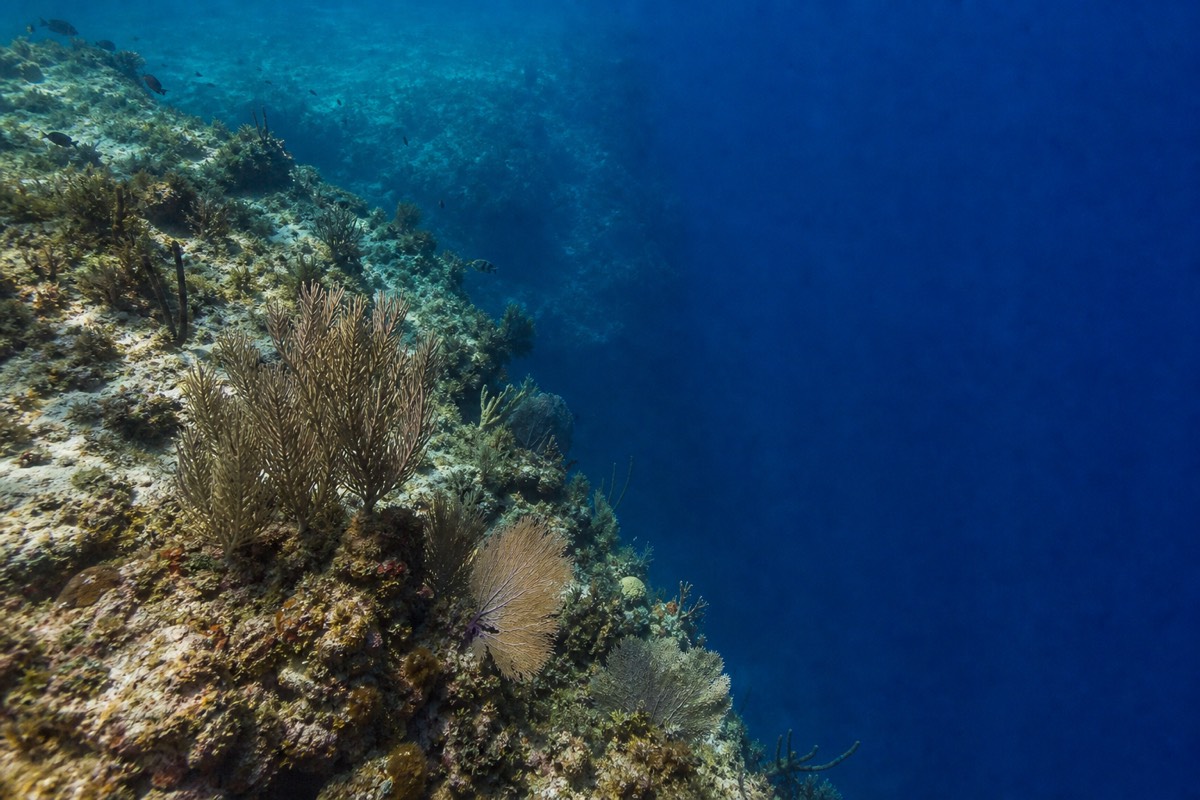
Off West Bay the shelf falls from shallow coral garden to a wall descending to 30 m and beyond, within swimming distance of the beach. The depth itself is harmless to a floating snorkeller. What changes at the edge is water movement, the absence of anything to stand on, and the psychological effect of both.
Visibility on the wall can reach around 30 m on a calm day, which sounds like a comfort and is not always one. Seeing that far down is exactly what unsettles people who were fine ten metres earlier over reef. It is a common reaction and not a character flaw. The fix is a vest, a guide within arm's reach, and permission to get back on the boat after ten minutes instead of forty.
This is the section of a snorkelling day where a boat, a crew and a headcount are worth paying for, which is what the three-stop reef snorkelling trip is set up to provide. The site-by-site detail of which stops sit over the shelf and which do not is in our guide to the best snorkelling spots on Roatán.
Who do the snorkel operators themselves turn away?
The operators publish their own exclusions and they are worth reading before you book. The three-stop reef trip does not accept non-swimmers or travellers over 70. The after-dark snorkel does not accept babies under one year or anyone with heart problems. Those are the operators' stated rules, not ours.
| Trip | Not suitable for | Supplied |
|---|---|---|
| Three-stop reef snorkel and beach day | Non-swimmers, travellers over 70 | Gear, park fees, bottled water |
| After-dark snorkel at French Cay | Babies under 1, heart problems | High-power torch, gear, small group capped at 10 |
| Private snorkel and West Bay day | No stated swimming exclusion; infants ride on laps | Vest, mask, tube, fins, resort day pass |
| Scuba dive trip (for contrast) | Non-swimmers, heart or respiratory issues, uncertified divers | Full gear, all reef park fees |
An exclusion is not a warning about the site. It is an operator declining to run a rescue they are not staffed for. Read the over-70 rule on the three-stop trip that way: the third stop is the wall, and the crew would rather say no in advance than manage a problem at the shelf edge. Child life jackets are provided on snorkel boats, snorkelling itself is optional once you are aboard, and most operators take children from around three or four with a parent in the water. The excursions that work with young children goes through the age and height rules across the island.
Is shore snorkelling at West Bay safe without a guide?
Genuinely, yes. West Bay is the easiest good snorkelling in the Caribbean to do unsupervised: you walk in from sand, the water shelves gently, the reef is a short swim out, and you can stand up or come ashore at any point. Rented mask and snorkel cost roughly $10 to $15 on the beach.
Two caveats and they are both about other people. Between 10:00 and 15:00 on multi-ship days the water near the main beach section carries a lot of swimmers, which cuts visibility and raises the odds of somebody kicking you. And boat traffic concentrates where the crowds are. Going in before 09:30, or walking further down the beach toward its western end, solves both at once. Our full West Bay Beach guide covers where to enter and where the quiet stretches are.
Sun and dehydration: the risk that actually sends people home early
Floating face down for an hour puts your back, shoulders and calves under direct equatorial sun with water reflecting more of it upward. Excursion days run 28 to 33C with high humidity. Sunburn and heat exhaustion affect more visitors here than every marine hazard combined.
A rash guard is the single highest-value item in a snorkelling bag, because it does not wash off at minute twenty the way sunscreen does. Add high-SPF waterproof sunscreen and SPF lip balm for what the shirt does not cover, a wide-brim hat for the boat, and your own litre of water. Bottled water is included on the guided trips, but treat it as a top-up rather than the day's supply. Anyone planning serious water time on a trip should also check what their travel cover includes; Divers Alert Network is the standard reference for water-sport medical cover and emergency assistance.
When a guided boat is safer, and when it makes no difference
A guide matters at the wall, at night, and on any site reached by boat where current and depth are in play. A guide adds nothing to a shore swim over shallow reef at West Bay in the morning. Paying for supervision you do not need is a waste; skipping it at the shelf edge is not.
What a crew actually gives you at the demanding sites is a headcount, a vest fitted properly, a boat you can be pulled into, and someone who knows which way the water is moving today. On the three-stop reef snorkelling trip that supervision is what makes a wall stop reasonable for an ordinary swimmer. On the exclusive private snorkel and wildlife day, the 45 minutes at Blue Rock come with a dedicated snorkel guide and full gear including a vest, which is the gentler end of guided water.
The other thing a guide enforces is the no-touch rule, and that protects you as much as the coral. Reef contact is where most snorkelling cuts and stings come from, and the operators here work inside a Marine Protected Area managed by the Roatán Marine Park, where no-contact is a condition of being on the water rather than a suggestion. The reef is under enough thermal stress already, as NOAA's account of coral bleaching sets out, without a season of hands on it. Roatán's wider safety picture is unremarkable in the good sense, with low violent crime and incidents involving visitors mostly limited to petty theft in crowded areas; how safe Roatán actually is covers that side. In the water, the honest summary is that the reef is not what will hurt you. The sun is. Plan for the sun, wear the vest at the wall, keep your hands to yourself, and the three-stop reef snorkelling trip handles the rest.