Best Snorkeling Spots in Roatán
Roatan sits on the second-largest barrier reef in the world, close enough to shore that the best snorkelling here starts on the sand at West Bay and ends at a wall dropping to 30 m.
Booking Choice: Choose named reef stops, a beach finish or an after-dark outing. Explore Shipwreck, Starfish And Blue Channel ↗
Price tables and illustrated budgets below are historical planning examples from the earlier guide. The current booking options may be different products; check their dates, inclusions and final prices before comparing costs.
Roatan's snorkel sites: access and difficulty at a glance
Site names and shore-or-boat access are taken from the operators' own published itineraries and this site's tour listings, read in August 2026. The 1 to 5 difficulty figure is our team's editorial read of those descriptions, not a measured standard.
What makes Roatan snorkeling different from most Caribbean reefs?
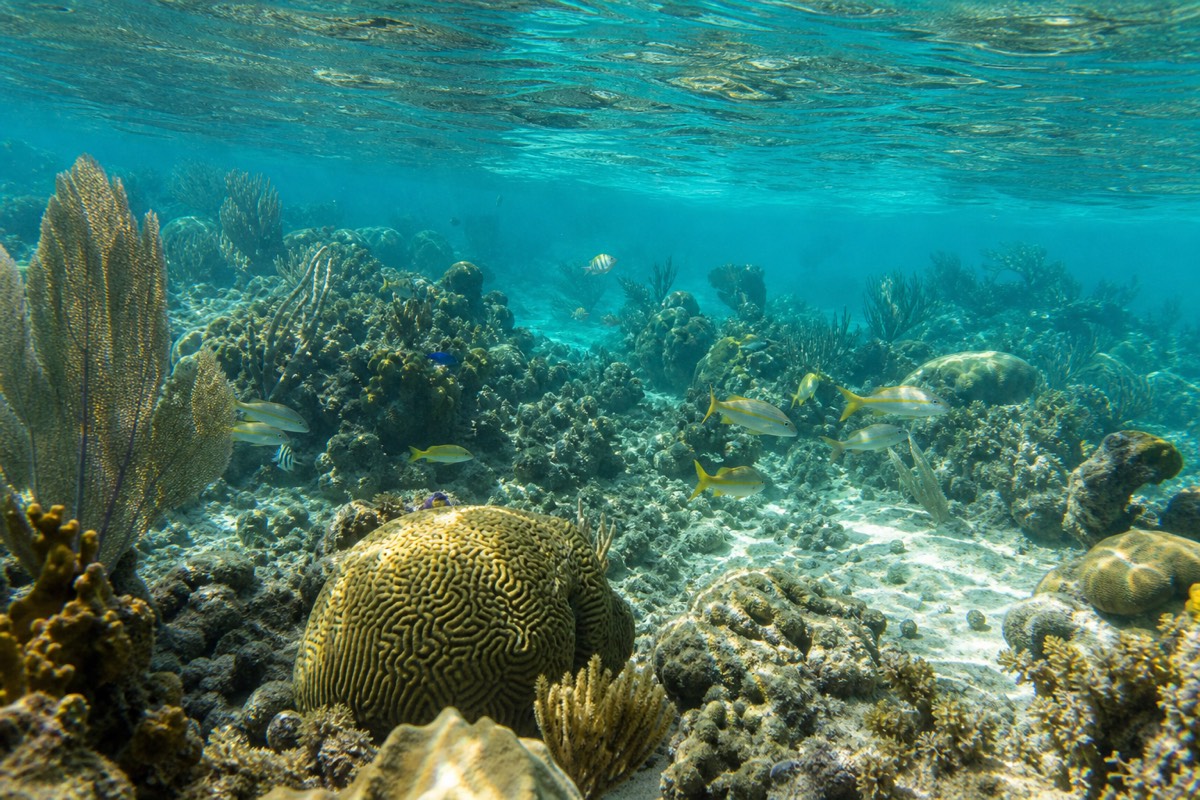
Roatán sits on the Mesoamerican Barrier Reef, the second-largest reef system in the world and the largest in the northern hemisphere. The reef runs close enough to shore that snorkelling starts within minutes of most beaches, and at West Bay it starts on the sand itself, with no boat and no booking required.
Proximity is the whole argument. On most islands, seeing a healthy reef means a morning committed to a boat: a transfer, a briefing, a crossing, a queue to get in the water. Here the shelf is right there. Off West Bay the seabed runs out from the beach as shallow coral garden, flattens into reef, then falls away at a shelf edge into a wall that drops to 30 m and beyond, all of it within swimming distance of the sand. That single piece of geography is why the same island can serve a nervous first-timer in a life vest and a diver logging wall descents on the same afternoon.
The reef system itself is documented by NOAA's coral reef information system, which tracks the Mesoamerican Barrier Reef across its full run from Mexico to Honduras. What that scale means for a visitor is simple: there is no single best site, only sites that suit different swimmers, different tides of cruise-ship traffic, and different hours of the day.
Which are the best snorkeling spots in Roatan, site by site?
Ten sites come up again and again in the operators' own itineraries: West Bay Beach from the shore, Blue Channel, Starfish Alley, Blue Rock, the shallow Marine Park, the barrier reef proper, the drop-off wall, French Cay Marine Park after dark, Pigeon Cay, and the Prince Albert wreck. They are not interchangeable.
The table below is the short version of everything that follows. Access, difficulty and timing come from the published itineraries of the operators we work with; the difficulty read is our team's, not a measured scale.
| Site | How you reach it | Character | Difficulty | Best time | Likely sightings |
|---|---|---|---|---|---|
| West Bay Beach reef | Walk in from the sand | Shallow coral garden a short swim out | Very easy | Before 09:30, after 15:30 | Tropical fish, turtles, rays |
| Shallow Marine Park | Boat, first stop on the 3-stop run | Shallow warm-up water | Very easy | First departures of the day | Fish schools, coral heads |
| Blue Rock | 5-minute boat transit from West Bay | Enclosed, described as a natural aquarium | Easy | Mid-morning, calm days | Colourful coral, dense fish |
| Starfish Alley | Boat, multi-stop snorkel trips | Sheltered sand-and-reef flat | Easy | Calm mornings | Turtles, fish, conch |
| Pigeon Cay | Boat, dedicated cay trips | Cay-and-reef day stop | Easy | Early boats, before the fleet | Tropical fish, shallow coral |
| Blue Channel | Boat, multi-stop snorkel trips | Channel cut through reef structure | Moderate | Flat-sea days | Turtles, fish, reef structure |
| Barrier reef proper | Boat, second stop on the 3-stop run | Continuous living reef | Moderate | Morning, before boats stir sand | Parrotfish, conch, lobster |
| Prince Albert wreck | Boat, wreck-specific trips | Easy drift over a sunken hull | Demanding | Calm, high-visibility days | Fish schools on the structure |
| French Cay Marine Park | Boat, after dark only | Night reef, torch-lit | Demanding | After sunset, new-moon cycles | Octopus, squid, lobster, plankton |
| The drop-off wall | Boat, third stop on the 3-stop run | Shelf edge falling to 30 m and beyond | Demanding | Calm mornings, visibility up to 30 m | Turtles, groupers, eagle rays |
Read the difficulty column as stamina and nerve, not skill. Nothing on this list asks for a technique you do not already have. What the demanding sites ask for is comfort in water with nothing beneath you, which is a different thing entirely and which people discover about themselves only once they are floating over it.
Snorkeling in Roatan from the beach: what West Bay gives you for the price of a mask
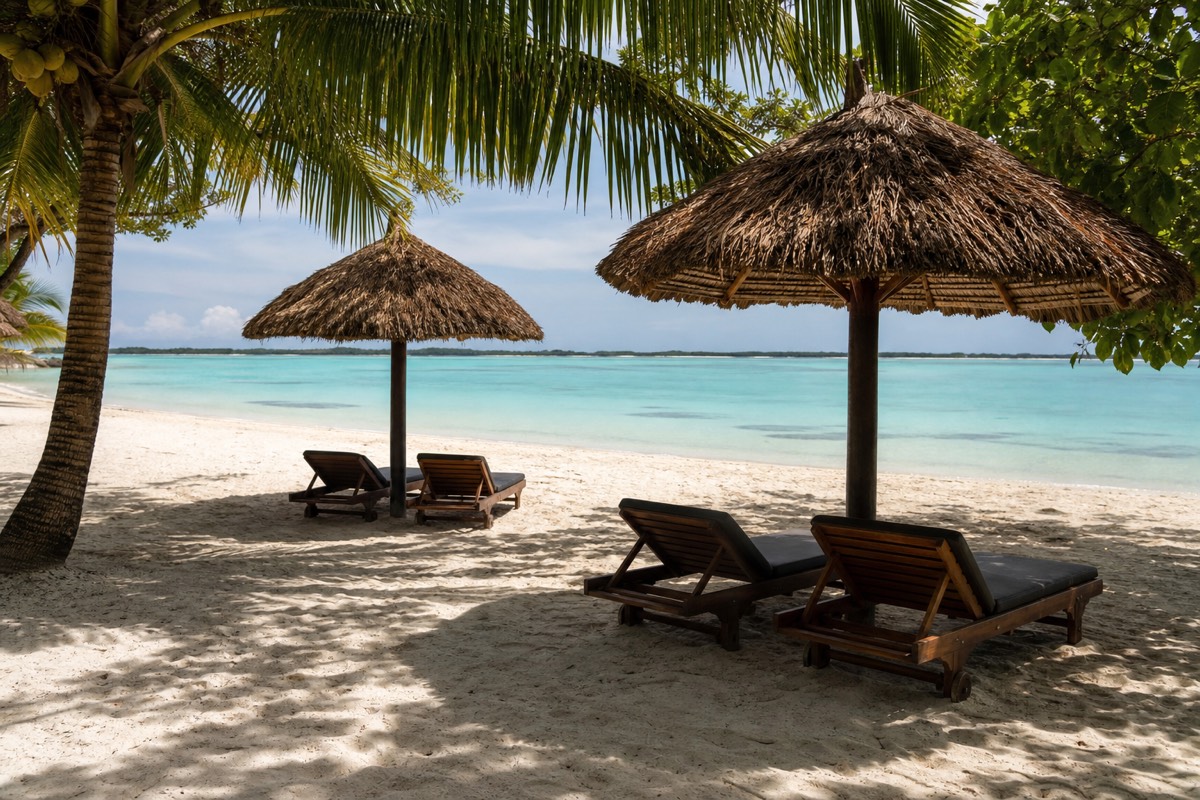
West Bay Beach is the only place on the island where world-class reef is a swim rather than an excursion. Mask and snorkel rent on the sand for roughly $10 to $15, the water shelves gently, and the reef sits close enough that turtles, colourful fish and rays are common sightings from shore.
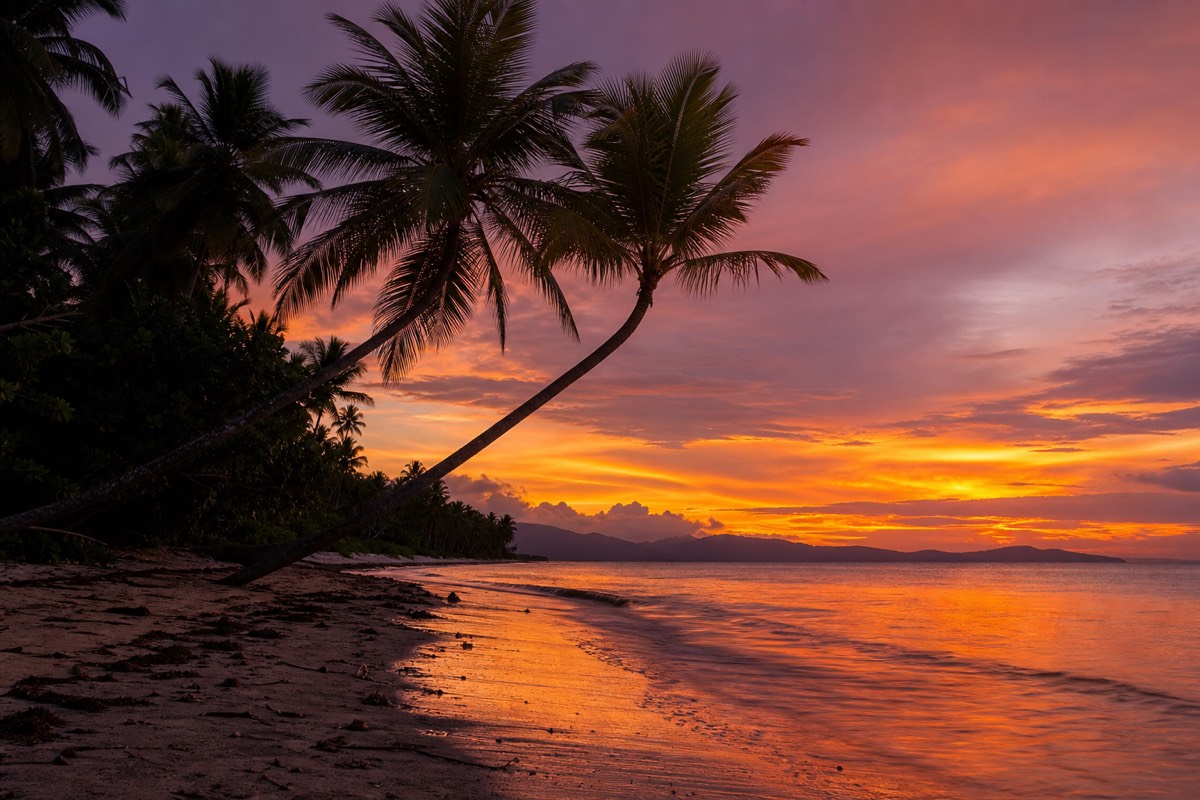
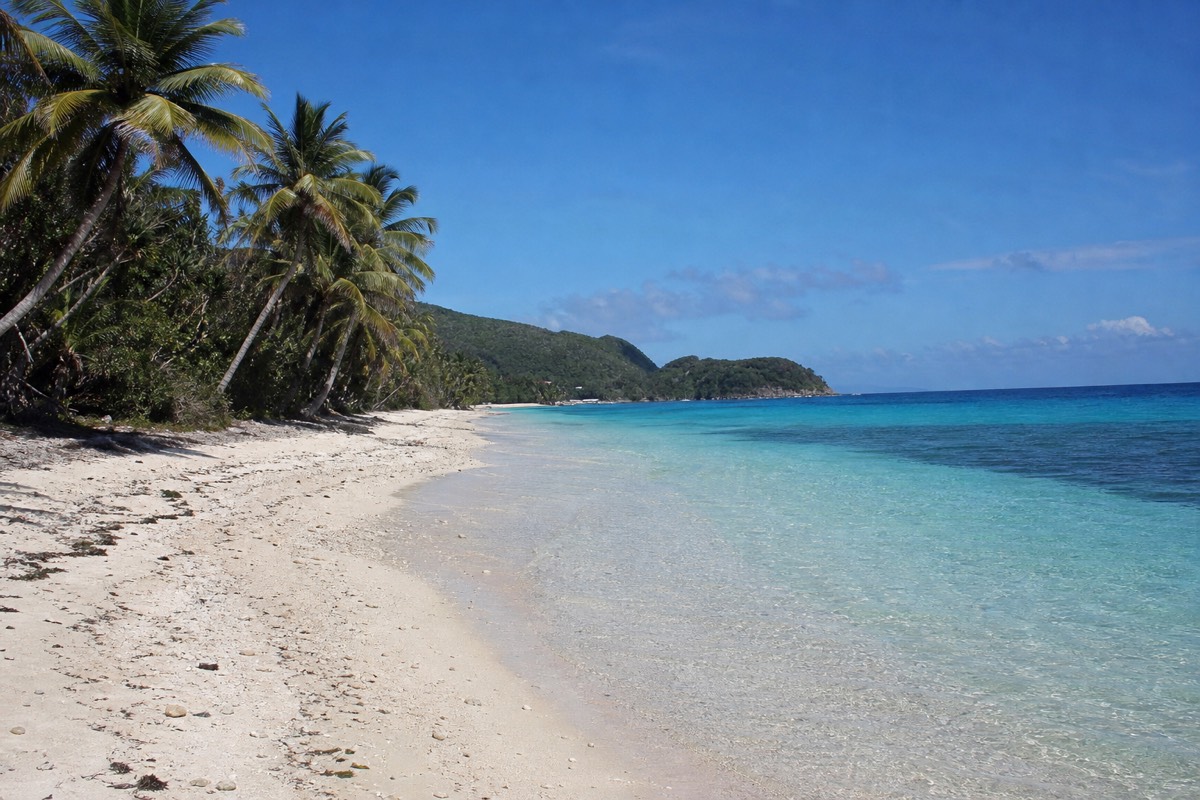
The beach itself is fine white sand with water running pale turquoise in the shallows and deep blue further out. Beach bars and restaurants are walkable, Bananarama and Infinity Bay among them, so a shore snorkelling day needs no logistics beyond a taxi and a towel. That taxi runs roughly $10 to $20 per person from Mahogany Bay in 20 to 30 minutes, or $15 to $25 per person from Coxen Hole in 25 to 35 minutes. Which of those two applies depends entirely on which cruise terminal your ship uses, and the two are genuinely different places.
Timing matters more here than at any boat site. West Bay fills between 10:00 and 15:00 on multi-ship days, when three to five large ships put several thousand people ashore at once. It is quiet before 09:30 and clears again after 15:30, once passengers start heading back for a 16:30 to 17:30 all-aboard. The beach is long, and walking further down toward its western end finds emptier sand and calmer water even at midday. The practical detail of where to enter, where to sit and what a day pass buys is in our full West Bay Beach guide, and if you are still choosing a base, how West End compares with West Bay matters more for snorkelling than for anything else.
Blue Channel and Starfish Alley: what the two most-asked-for names actually are
Blue Channel and Starfish Alley are the two named reef sites that appear most often in Roatán snorkelling searches. Both are boat stops on multi-site snorkel trips rather than shore entries, and both are described in the operators' own material as reefs where turtles and fish schools are the draw.
We will be straight about the limits of what we can tell you. The operators we list name these two sites and describe what swims there, but they do not publish depth profiles, entry points or current patterns for either. Anyone who gives you a precise depth for Blue Channel is either quoting a dive shop's chart or making it up. What the corpus does support is the shape of the experience: a multi-stop boat morning that strings together reefs like these with shipwrecks, and returns you with turtles and fish schools in your photos rather than a single hero moment.
Starfish Alley is the gentler of the two by reputation and by name. Blue Channel, being a cut through reef structure rather than a flat, is the one where water moves and where a guide earns the fee. If you are picking one on a short port day, the sheltered option is the safer bet, and the difference in what you see is smaller than the difference in how tired you get.
Is Blue Rock the best snorkeling in Roatan you can reach in five minutes?
Blue Rock sits off West Bay, five minutes by boat from the beach, and one operator describes it as a natural aquarium. It is the strongest value on the island for anyone who wants guided reef time without committing a whole morning to a boat: 45 minutes in the water, gear included, beach day either side.
The way it works in practice is that the guided snorkel is bundled inside a wider private day rather than sold on its own. The exclusive private snorkel and wildlife day runs $88 per person for five hours, rated 4.9 with 1,690+ booked, and pairs a wildlife sanctuary visit with a West Bay resort day pass, full snorkel gear including a vest, and the short transit out to Blue Rock. You bring your own towels; food and drinks at the resort are on your tab.
Our honest read is that Blue Rock suits a specific person: someone who wants the reassurance of a guide and a vest, but who would rather spend the rest of the day on a lounger than on a bench seat. It is not the most dramatic water on this list. It is the most comfortable good water, and for a lot of people that is the better trade.
What the three-stop run adds to a day of Roatan snorkeling
The three-stop structure is the island's standard snorkelling day: shallow Marine Park as a warm-up, then the barrier reef proper, then the drop-off wall where the shelf falls away. Each stop runs 30 to 45 minutes in the water, with roughly a 35-minute transfer from either cruise port.
| Stop | Time in water | What it is for | What you see |
|---|---|---|---|
| 1. Shallow Marine Park | 30 to 45 min | Warm-up for beginners, gear check, buoyancy | Coral heads, tropical fish schools |
| 2. Barrier reef | 30 to 45 min | The main event, continuous living reef | Parrotfish, conch, spiny lobster |
| 3. Drop-off wall | 30 to 45 min | The shelf edge, the view down | Turtles, groupers, eagle rays |
The three-stop reef snorkelling trip runs from $85 for about four hours, rated 4.8 with 828+ booked, with gear and park fees included, bottled water on board, and a private white-sand beach with a bar and restaurant at the end on your own tab. Cruise passengers are asked to exit the ship 30 minutes after doors open rather than the usual hour, specifically to reach the reef ahead of the larger ship excursions. That single instruction is worth more than any other tip on this page, because visibility at these sites is decided by how many fins have already been over them.
The operator excludes non-swimmers and travellers over 70 from this trip. That is their stated policy, not our judgement, and it is a reasonable one given the third stop. If either applies to you, the shore reef at West Bay covers the same fish without the wall, and how safe snorkelling here really is goes through the exclusions in detail.
What changes on the reef after dark at French Cay Marine Park?
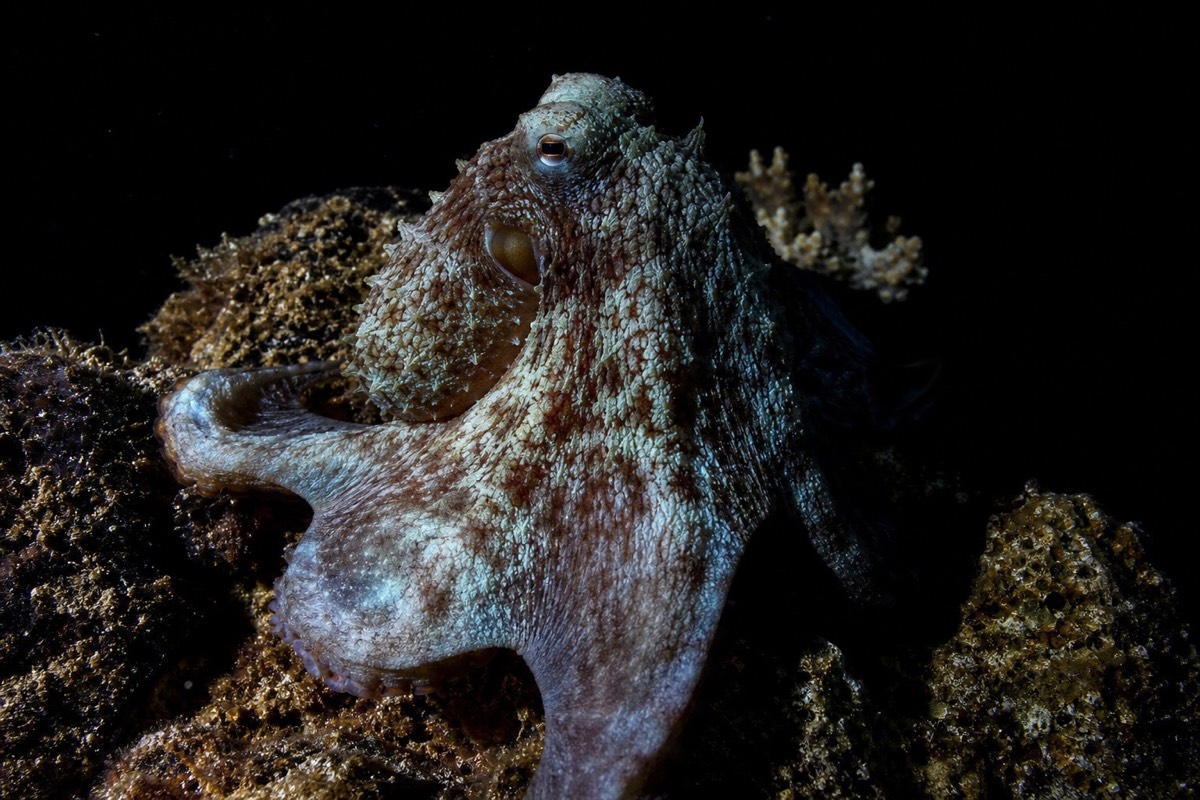
Almost everything. French Cay Marine Park after sunset is a different animal population from the same coral: Caribbean octopus out hunting, spiny lobster walking in the open, squid hanging in the torch beam, anemones fully extended, and bioluminescent plankton on new-moon cycles.
The night trip is capped at 10 participants, runs about two hours end to end with roughly an hour in the water, and supplies a high-power underwater torch. Pickup is from hotels, rentals and Airbnbs rather than the cruise port, which rules it out for most ship days and makes it an overnight-visitor experience. The after-dark reef snorkel runs from $45, rated 5 with 322+ booked, and the operator excludes babies under one year and anyone with heart problems.
Two practical notes from the operator's own material. Move the torch beam slowly, because octopus camouflage works at night as well as it does by day and a swept beam finds nothing. And do not hold the light on an animal's eyes; guides teach a peripheral technique that lets you watch feeding behaviour without driving the creature back into the coral. Neither is a rule you would guess on your own, which is the argument for doing this one guided rather than improvising it.
Pigeon Cay and the Prince Albert wreck: the two sites you cannot walk to
Pigeon Cay and the Prince Albert wreck are both real, both named in Roatán snorkelling itineraries, and neither is a stop on the three tours this page recommends. Pigeon Cay is a boat destination for cay-and-reef days; the Prince Albert is a shipwreck people drift over on wreck-specific trips.
Pigeon Cay shows up in island itineraries as an alternative to the West Bay reefs, usually as a half-day or full-day boat trip with beach time on the cay. The reefs near West Bay can carry several boats at once, so a cay trip is partly a crowd strategy: fewer fins in the water, less stirred sand, better visibility for the same fish.
The Prince Albert is the island's best-known snorkellable wreck, an easy drift over structure rather than a technical exercise. We have scored it as demanding on the chart above for one reason only, which is that wreck sites sit in open water off the shelf and reward swimmers who are already comfortable there. If wrecks and structure are what you actually want, the honest answer is that scuba opens far more of them than snorkelling does, and Roatán's dive sites and certification costs is the page that sets out what that costs and how long it takes.
Shore or boat? What Roatan snorkeling costs either way
A shore snorkelling day at West Bay can be done for under $50 including the taxi both ways and rented gear. A guided boat day runs $45 to $88 per person before transport. Booking that boat day through a ship's excursion desk instead of direct typically costs 30 to 60% more for the same water.
| Line item | Typical cost | What it covers |
|---|---|---|
| Mask and snorkel rental on the beach | $10 to $15 | A day's shore snorkelling at West Bay |
| Taxi, Mahogany Bay to West Bay | $10 to $20 per person | 20 to 30 minutes each way |
| Taxi, Coxen Hole to West Bay | $15 to $25 per person | 25 to 35 minutes each way |
| Taxi, airport (RTB) to West Bay or West End | $30 to $50 | One way, for overnight visitors |
| After-dark snorkel at French Cay | From $45 | 2 hours, torch, gear, lodging pickup |
| Three-stop reef snorkel and beach day | From $85 | 4 hours, three sites, gear and park fees |
| Private snorkel, wildlife and West Bay day | From $88 | 5 hours, private van, resort day pass, guided snorkel |
| Ship excursion desk, comparable trip | 30 to 60% above direct rates | The ship's own departure guarantee |
Cash is the thing people get wrong. The island runs largely on US dollars, plenty of beach vendors and taxis do not reliably take cards, and the gear stand on the sand is not going to run your Visa. Small bills, brought ashore, solve most of a snorkelling day's friction.
What will you actually see snorkeling in Roatan?
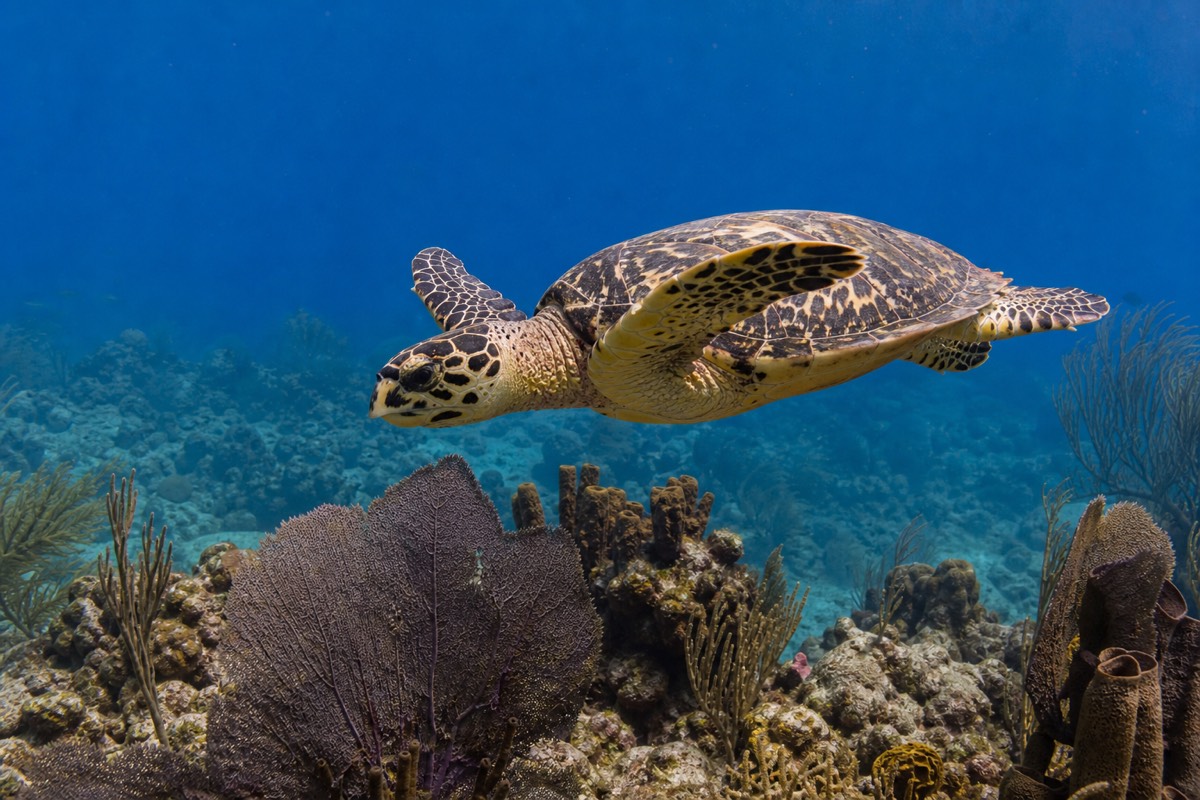
Sea turtles, parrotfish, groupers, conch, spiny lobster and spotted eagle rays are the animals that turn up repeatedly in the operators' own trip descriptions. On the wall stop of the three-stop run, turtles, groupers and eagle rays are described as routine rather than lucky.
| What you might see | Where | How likely |
|---|---|---|
| Tropical fish schools | Every site, shore and boat | Every trip |
| Sea turtles | West Bay shore, reef and wall stops | Common, reported from shore too |
| Parrotfish and conch | Barrier reef, coral gardens | Common |
| Groupers | Reef and wall | Routine on the wall stop |
| Spotted eagle rays | Wall and open water | Routine on the wall stop |
| Spiny lobster | Reef crevices, and in the open at night | Common by day, easier at night |
| Caribbean octopus and squid | French Cay after dark | The reason the night trip exists |
| Bioluminescent plankton | French Cay, new-moon cycles | Moon and conditions dependent |
| Sharks | Water column just beyond the wall edge | Occasional, not a scheduled sighting |
| Whale sharks | Bay Islands, strongly associated with Utila | Opportunistic, never guaranteed |
The whale shark row needs saying plainly, because a lot of Roatán marketing blurs it. Whale sharks in the Bay Islands are a Utila story, a separate island, where PADI's own seasonality notes put the peaks around March to April and again roughly October to December. Around Roatán they are opportunistic. No operator on this site sells a whale shark trip and none should. If you want the real timing before you book flights, when whale sharks pass through the Bay Islands lays it out without the hedging.
When is the best snorkeling in Roatan, by season and by hour?
The hour matters more than the month. First boats and pre-09:30 shore swims give the clearest water on any date, because visibility here is mostly a function of how much sand other people have already kicked up. Across the year, January to April is the most reliable weather and the busiest; November and May are the value windows.
Our own corpus is not perfectly consistent on seasonality and we would rather say so than pick a version and present it as settled. The tour pages' season tables run January to March as the clearest and calmest water; a separate pricing section names March to June and again September to October as the calmest seas and best visibility. Both agree on the shoulder logic: the dry months are reliable, the summer and early autumn bring afternoon swell, and the sheltered north shore stays protected most of the year.
| Window | Sea and visibility | Crowds | Verdict for snorkelling |
|---|---|---|---|
| January to March | Best odds of glassy, calm water | Heaviest cruise traffic of the year | Great water, book two weeks ahead |
| April to June | Warm sea, active marine life | Easing after spring break | Strong, with intense midday heat |
| July to October | Higher rainfall, afternoon swells, weather-dependent stops | Lowest of the year | Cheapest, least reliable for boats |
| November | Rain dropping sharply, sea around 28C | Very low cruise traffic | The single best value month |
| December | Good weather | Traffic jumps sharply from mid-month | Fine early, crowded late |
Air temperatures run roughly 21C to 29C year round, moderated by trade winds, and excursion days sit in the 28 to 33C range with high humidity. A light rain jacket earns its packing space between May and October. The fuller month-by-month picture, including prices and ship volumes, is in the best time of year to visit Roatán.
What gear do you need for snorkeling in Roatan?
Bring your own mask if you own one and rent everything else. A leaking rental mask is the single most common complaint on guided trips, and it is the one piece of equipment where fit cannot be fixed at the site. Everything else on this list is either supplied, rentable on the beach, or optional.
| Item | Bring, rent or supplied | Why |
|---|---|---|
| Mask and snorkel | Bring if you own one | Fit is personal; leaks ruin a 45-minute session |
| Fins and vest | Supplied on guided trips | Gear and park fees are included on the tours here |
| Beach gear rental | $10 to $15 on the sand | Shore snorkelling at West Bay needs nothing else |
| Rash guard | Bring | Sun protection that does not wash off mid-swim |
| High-SPF waterproof sunscreen and SPF lip balm | Bring | You float face down for an hour with your back exposed |
| Towel | Bring | Towels are usually not provided, even at beach-club stops |
| Water shoes or grippy sandals | Bring | Boat decks and rocky entries |
| Dry bag or waterproof phone case | Bring | Nothing on a snorkel boat stays dry by accident |
| Motion-sickness tablets | Bring, take early | Transfers run about 35 minutes each way |
| Small USD bills | Bring | Beach bars, gear stands and taxis, cards are unreliable |
Polarised sunglasses, a wide-brim hat and a one-litre reusable bottle round out the list. Bottled water is included on the guided trips, but the boat's supply is a top-up, not a day's hydration.
Why nobody touches anything: the Marine Protected Area rules
Roatán's reef sits inside a Marine Protected Area, and the operators here enforce a no-contact rule: no touching coral, no touching marine life, no standing on the reef. It is not a formality. Contact damage is one of the few reef stresses a visitor personally controls.
The stewardship work, the mooring buoys that keep boats from anchoring on coral, and the rules themselves are run through the Roatán Marine Park. Guides on the trips we list enforce reef-contact and wildlife-interaction rules as a condition of the trip rather than as advice, and the dive operator's own listing states flatly that touching marine life or coral is forbidden.
The wider reason is worth understanding before you get in. Corals are living animals under real thermal stress, and NOAA's explanation of coral bleaching sets out how heat stress causes coral to expel the algae that feed and colour it. A reef already carrying that load does not need a few thousand hands a season on top. The practical version for a snorkeller is short: keep your fins up and behind you, use the vest for buoyancy instead of the seabed, and if you want a closer look at something, get closer with your eyes.
The same logic applies above water. Honduras restricted the handling of wildlife for photographs in 2025, so sanctuaries are now observation rather than contact. The pattern across the island is consistent, and once you see it, the no-touch rule underwater stops feeling like an imposition and starts feeling like the price of the thing being there at all.
Who should skip the boat and just go snorkeling in Roatan from the beach?
Skip the boat if you are a nervous swimmer, if you are travelling with toddlers, if you get seasick, if your port day is short, or if what you actually want is a beach day with fish in it. West Bay's shore reef delivers turtles, rays and fish schools for the price of a rented mask.
That is a genuine recommendation, not a consolation prize. Plenty of people book a three-stop boat morning because it looks like the serious option, then spend the first stop working out that they do not enjoy open water, the second stop cold, and the third stop on the boat. The shore reef has no such failure mode. You stand up whenever you want.
The people who should take the boat are the ones who already know they are comfortable floating over deep water and who want the thing that shore snorkelling cannot give them: the shelf edge, the drop, and the animals that patrol it. That is what the wall stop is for, and it is why turtles, groupers and eagle rays read as routine on that itinerary and merely common everywhere else. If the pull is the deep structure rather than the fish, the honest next step is not a longer snorkel trip but a tank, and whether the diving justifies the cost answers that before you spend anything.
For everyone in between, the sensible shape of a Roatán water day is both: shore snorkel early while West Bay is empty, guided boat time once the sun is high enough to light the reef, and a beach chair for the hours when the crowds peak. The guided snorkel trips at Roatan Honduras Tours are all built around that rhythm, which is why they leave early and hand you back the afternoon.