What Language Do They Speak in Roatán?
Spanish is the official language of Honduras, yet most visitors get through a week on Roatán in English, which is a quirk of Bay Islands history rather than a service the tourism industry invented.
Booking Choice: Choose an English- or Spanish-guided island experience. Explore Punta Gorda Culture And East-End Stops ↗
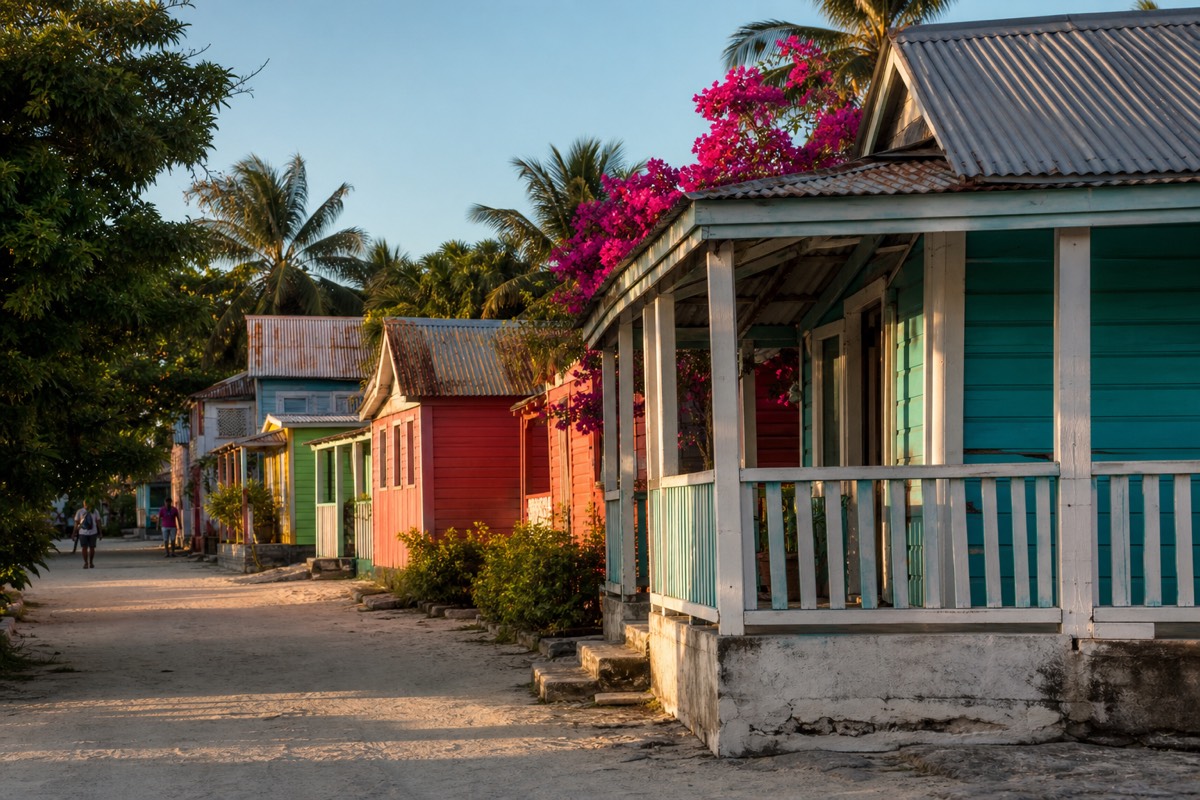
Is Roatán Spanish speaking or English speaking?
Spanish is the official language of Honduras, and Roatán is Honduran territory, so Spanish is the language of government, schools and paperwork. In practice English is widely spoken across the island, alongside an English-based island Creole and, in Garífuna communities, the Garífuna language.
That combination surprises first-time visitors, who often arrive braced for a full week of pointing at menus. Most do not need it. The tourist corridor on the western end of the island runs in English, the operators we work with put bilingual guides on their vehicles, and the drivers who meet ships speak enough English to sort out a fare and a destination without difficulty.
What that does not mean is that Roatán is an English-speaking country. Step off the visitor circuit into a pharmacy, a hardware shop or a government office in Coxen Hole and Spanish is the working language. The useful mental model is not "English island" but "Honduran island where English gets you a long way".
Why is English so widely spoken in the Bay Islands?
Because it was here before the tourists were. English on Roatán is not a service the tourism industry added: the Bay Islands have a long-standing English-speaking population and an English-based island Creole that developed locally, which is why English on Roatán sounds different from English in a resort in Cancún.
This is the part most travel pages get subtly wrong. They treat English as a hospitality veneer, something the staff learned for work. On Roatán it is a community language for a lot of people, spoken at home and among neighbours, not only across a counter. The Creole you will hear in island conversation is not broken English or Spanish-accented English; it is its own thing, and if two locals switch into it mid-conversation you will catch about half of it.
We should be straight about the limits of what we can tell you here. We are a tour site working from our operators' listings and a small set of verified sources, not a linguistics department. We are not going to hand you speaker percentages or a dated history of how the Creole formed, because we cannot source those, and made-up numbers on a page like this are worse than no numbers at all.
Where on Roatán will you actually need Spanish?
Almost nowhere on a normal tourist day, and quite often the moment you step outside one. West Bay, West End, the dive shops and the tour vehicles run in English. Coxen Hole shops, buses, clinics and anything official run in Spanish, and a few phrases go a long way there.
| Where you are | What to expect |
|---|---|
| Cruise terminal taxis and shuttles | English is common among tourist drivers; agree the fare up front, since many trips are fixed price rather than metered |
| Booked tours and dive boats | Guides on the tours we list work in English and Spanish |
| West Bay and West End restaurants and bars | English throughout the visitor strip |
| Coxen Hole shops, markets and local buses | Spanish is the working language; basic phrases and small USD bills both help |
| Pharmacies, clinics, anything official | Spanish; this is the situation where a translation app earns its place |
| Punta Gorda and Garífuna communities | Garífuna alongside Spanish, with English in visitor-facing settings |
That table is our own read from working with island operators rather than a survey, and it will not hold on every street. Treat it as a planning shape, not a rule.
The row that deserves preparation is the medical one. If you need a pharmacy or a clinic, you want the words for your condition written down before you are standing at a counter feeling unwell, and you want to have read the CDC's Honduras travel health page before you fly rather than after. For wider public health context on the country, PAHO's Honduras country page is the other source worth a look.
What language will your guide and driver speak?
English, in every case on this site, and usually Spanish as well. The operators' own listings are explicit about it: the chocolate and markets island tour advertises a professional bilingual guide, the sanctuary and snorkel day lists a bilingual English and Spanish guide, and the cooking class instructor is listed as working in English and Spanish.
The practical upshot is that language is not a reason to pick one tour over another here. It is a reason to ask a lot of questions, though. On the fully custom private island day you build the itinerary with your driver-guide in conversation, which only works if you are both comfortable talking, and you will be.
It also matters for the food-focused options. The private Roatán cooking class is three hours of step-by-step instruction around heat and knives, so an instructor who can switch languages mid-sentence is doing real work, not marketing. Same on the mangrove tunnel and Garifuna village tour, where the value is in what the guide explains about Oak Ridge and Punta Gorda rather than the boat ride itself.
What is the Garífuna language, and where would you hear it?
Garífuna is the language of the Garífuna people of the Caribbean coast of Central America, and it is not a dialect of Spanish or English. Its language, dance and music are inscribed on UNESCO's Representative List of the Intangible Cultural Heritage of Humanity, covering Belize, Guatemala, Honduras and Nicaragua.
On Roatán, the place associated with it is Punta Gorda on the east end, the first Garífuna settlement in Central America. You are not going to learn the language on a four-hour tour, and no honest operator will suggest otherwise. What a village visit gives you is context: hearing it spoken, understanding that it belongs to a living community rather than a museum, and eating food, machuca among it, that came out of the same culture.
The UNESCO inscription for Garífuna language, dance and music is the source worth reading before you go, and it is short. For the island-specific version, our own Garifuna culture on Roatán guide covers what a village visit actually involves.
Which Spanish phrases are worth learning for a day on Roatán?
A handful, and only a handful. You are not learning Spanish for this trip. You are learning enough to greet someone properly, ask a price, and be polite when you switch to English, which is the difference between a transaction and a decent exchange.
| Spanish | English | When you will use it |
|---|---|---|
| Buenos dias / Buenas tardes | Good morning / Good afternoon | Opening anything, everywhere |
| Por favor / Gracias | Please / Thank you | Constantly |
| Habla ingles? | Do you speak English? | The single most useful sentence on this list |
| Cuanto cuesta? | How much is it? | Taxis, markets, beach vendors |
| La cuenta, por favor | The bill, please | Restaurants off the resort strip |
| Donde esta el bano? | Where is the bathroom? | Everywhere, eventually |
| Con permiso | Excuse me | Crowded markets and buses |
| No, gracias | No, thank you | Beach vendors, said with a smile |
The one to actually memorise is the third row. Asking whether someone speaks English, in Spanish, does more for a conversation on this island than any other phrase, because it puts the choice with them instead of assuming it.
What we cannot tell you about language on Roatán
We have no census figures, no speaker counts, no percentage split between Spanish, English, island Creole and Garífuna, and no dated account of how the Bay Islands came to be English-speaking. Those numbers exist somewhere. They are not in the sources we verified, so they are not on this page.
What we can stand behind is narrow and useful: Spanish is Honduras's official language, English is common among tourist drivers on this island, the guides on the tours we list work in English and Spanish, the cooking class instructor works in both, and Garífuna is a living language with a UNESCO inscription behind it.
Language also has almost nothing to do with the questions most visitors are really asking, which are about safety and logistics. If those are on your mind, we have written honestly about how safe Roatán actually is, about which cruise terminal your ship uses, and about spending a port day without a booked tour. If you would rather have someone else handle the day entirely, that is what the guided Roatán tours we list are for, and every one of them will meet you in English.