Roatán Garifuna Culture & Village Guide
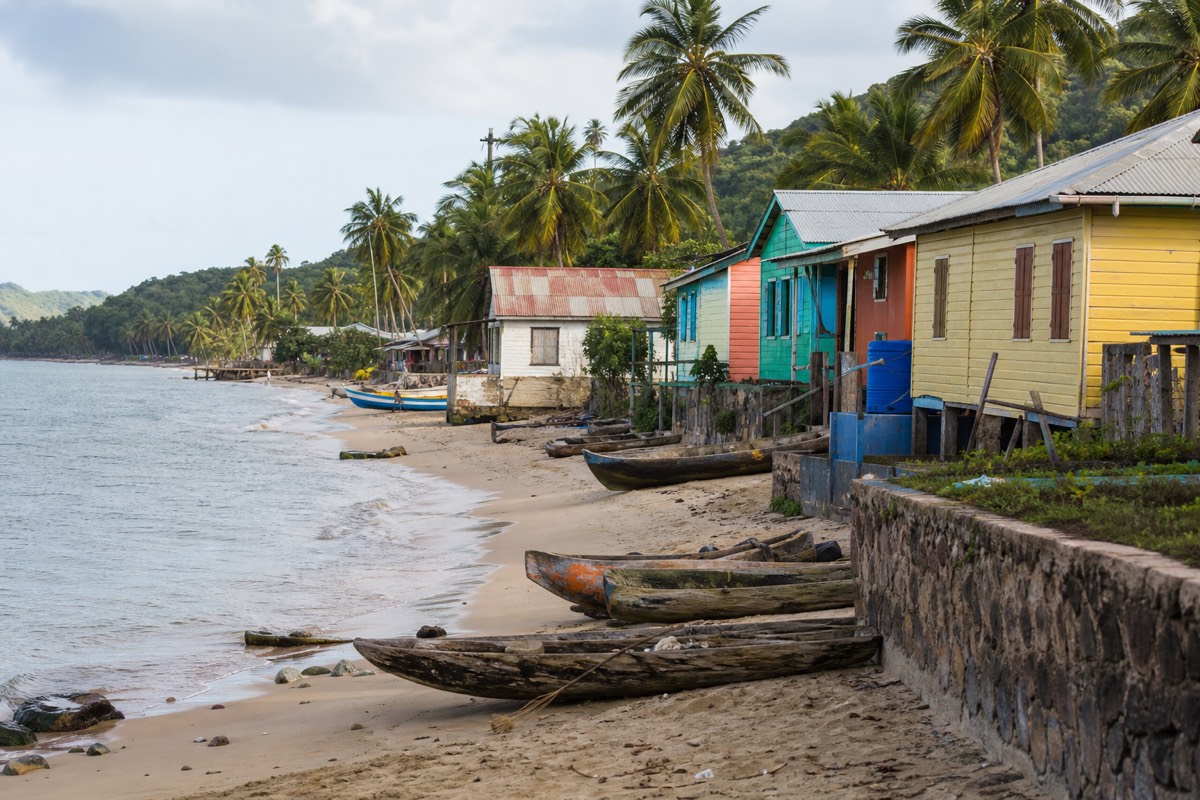
Punta Gorda on Roatán's east end is the first Garifuna settlement in Central America, and visiting it well means arriving as a guest rather than an audience, which changes what you get out of the day.
Booking Choice: Give Punta Gorda its own visit or combine it with the mangrove boat. Explore Punta Gorda Culture And East-End Stops ↗
Price tables and illustrated budgets below are historical planning examples from the earlier guide. The current booking options may be different products; check their dates, inclusions and final prices before comparing costs.
The dishes, drinks and products actually named on the listings
Every item shown is taken from the operators' own published listings for the mangrove tunnel village tasting and the private Roatán cooking class, read in August 2026. Menus and stock change, so treat this as what the listings say rather than a fixed menu.
Who are the Garífuna, and what is actually on the record?
The Garífuna are a people of Central America's Caribbean coast whose language, dance and music UNESCO inscribed on the Representative List of the Intangible Cultural Heritage of Humanity, an inscription covering Belize, Guatemala, Honduras and Nicaragua. On Roatán, the community most visitors encounter is at Punta Gorda, on the island's east end.
We are going to be careful on this page, and the care is the point rather than a disclaimer. Plenty of travel pages about Garífuna culture carry founding dates, population counts, migration stories, drum rhythm names and festival calendars that nobody bothered to source. We are not going to add to that pile. What we can stand behind is the international recognition, which is documented, and what the operators who go there actually publish, which is specific and limited.
The recognition is real and it is worth understanding before you go. UNESCO's inscription of the language, dance and music of the Garífuna places this culture on the same list as heritage practices from every continent, across four countries at once. That last part matters: this is not a Honduran curiosity, it is a living culture with a Caribbean coastline's worth of communities behind it.
Everything past that belongs to people who can tell it properly. The history of how the Garífuna came to hold this coast is told by the community's own guides, elders and cultural organisations, and it is told better in a village in an hour than a web page can manage in a thousand words. Our honest read is that a visitor's job here is not to arrive pre-briefed with half-remembered facts, but to arrive able to listen and willing to ask.
Why does Punta Gorda matter on Roatán?
Punta Gorda sits on Roatán's east end and is described by the operators who take visitors there as the first Garífuna settlement in Central America. That claim is why the village appears on an island itinerary at all, and it is why a stop there is not interchangeable with another beach or another photo viewpoint.
Geography explains part of the reason it stayed distinct. Roatán's tourism gravity is at the western end: the airport near Coxen Hole, the cruise berths at Mahogany Bay and Coxen Hole, the resorts and dive shops of West Bay and West End, the sanctuaries in the hills above French Harbour. The east end is where the island narrows and quietens, where the harbours work rather than pose, and where Oak Ridge's houses stand out over the water on stilts with boats in place of cars.
That relative distance is a double-edged thing for a visitor. It means the village has not been reorganised around the cruise schedule the way some Caribbean stops have. It also means getting there costs you most of a half day, which is exactly why the trip that goes there bundles the village with the water route: read our full account of the mangrove tunnel tours on the east end for what the boat portion involves and how it fits a port day.
One honest caution about the historical claim. It is the operators' published wording and we quote it as such. We have not attached a date to it, and we would treat any page that gives you a precise year without saying where it came from with mild suspicion.
What does a Garifuna village visit on Roatán actually involve?
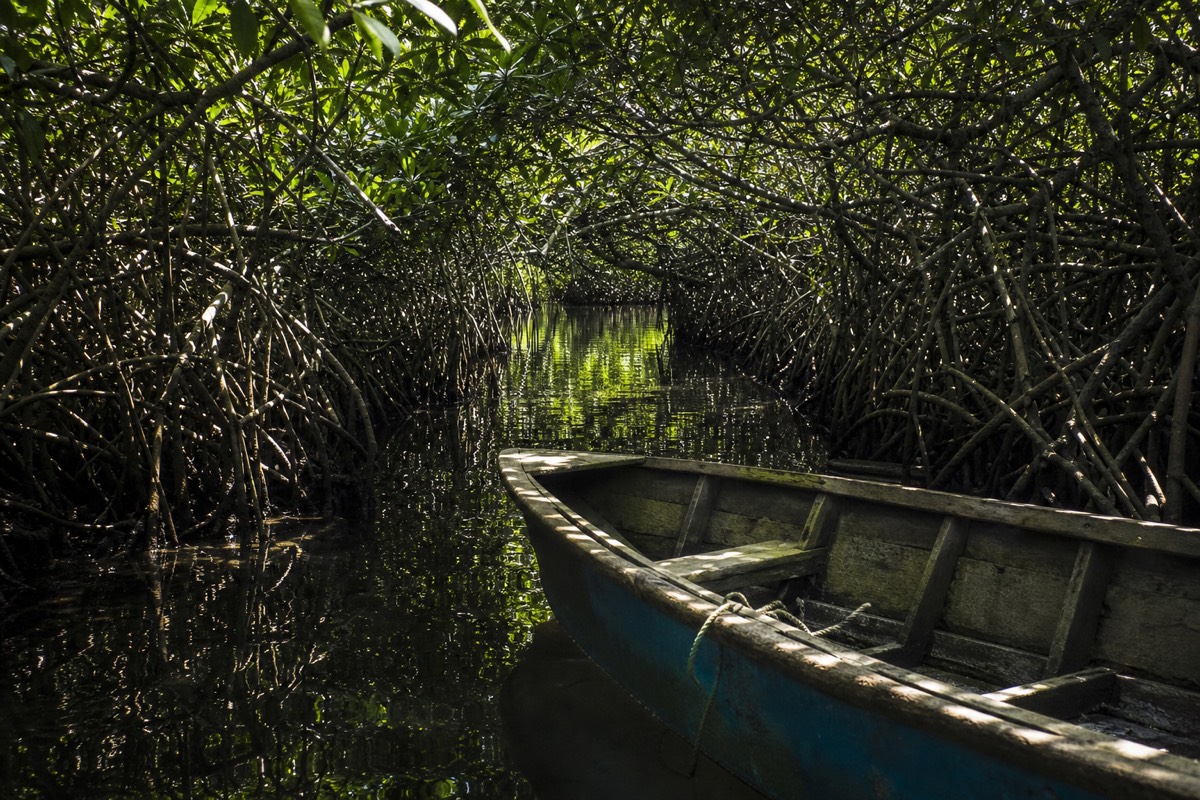
On the mangrove tunnel and Garífuna village tour, the village is the final stage of a 4 to 4.5 hour east end trip: air conditioned pickup from anywhere on the island, a wildlife encounter, a canoe boat cruise through the mangrove tunnel past Oak Ridge, then Punta Gorda on foot for the culture and a traditional food tasting with local drinks.
The village portion is therefore an hour or so at the end of a longer day, not a day in itself. That is a limitation and we would rather you know it before booking than discover it at 15:00. What you get is a walk, conversation, the food, and the ordinary texture of a place people live in. What you do not get is depth, and no half day product anywhere sells depth honestly.
What the listing includes:
- The Punta Gorda Garífuna village visit itself
- The mangrove canoe cruise and sightseeing on the way
- A traditional food tasting with local drinks
- A wildlife encounter session
- Round-trip air conditioned transport from port, hotel, rental or Airbnb
- Gratuities for the guides and captains, which are unusually included rather than expected at the end
What it does not include:
- Professional photography prints
- Personal souvenirs, so bring your own money for anything you want to buy
- Hard liquor beyond the drinks poured at the tasting
- Travel insurance
Group size is the detail that changes the day most. This trip often runs with just two travellers, which turns a village visit into a conversation rather than a procession. If you are a party of six or more, ask about capacity before you assume it works.
What is Garífuna and island food on Roatán, dish by dish?
Roatán's food mixes Garífuna, Afro-Caribbean, indigenous and mestizo influence, and the island's own copy is careful not to assign each dish to a single origin. The named dishes you will actually meet on the tours we list are machuca, a plantain soup, pastelitos, folded savoury snacks, and stewed chicken slow cooked in coconut milk with plantains.
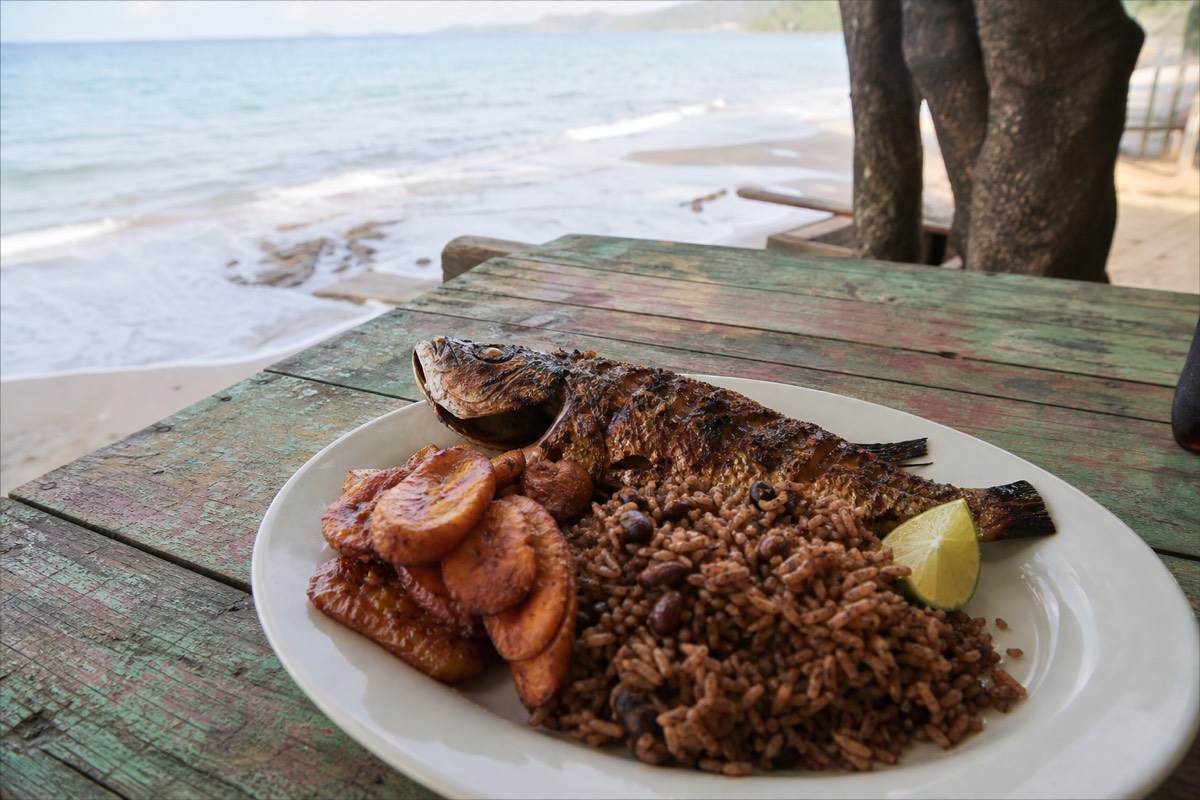
That care about attribution is worth copying. It is easy for a travel page to label everything on a Caribbean table as Garífuna and move on, and it is not accurate. Coconut milk, plantains and slow-stewed protein run through several culinary traditions on this coast at once. What we can tell you is which dishes are named, what they are, and where on this site's own tours you meet them.
| Dish or product | What it is | Where you meet it |
|---|---|---|
| Machuca | A plantain soup, and the one dish named on the village food tasting itself | Punta Gorda tasting, on the mangrove and village tour |
| Pastelitos | Folded savoury snacks, hand shaped and cooked crisp | The private cooking class, where you make them yourself |
| Stewed chicken in coconut milk | Slow cooked with plantains, the class's second hands-on dish | The private cooking class |
| Guifity | A Garífuna drink, listed among the local products available to buy | Shop shelf at the cooking class facility |
| Honduran vanilla | One of the island's named local products, and a flat, light thing to carry home | Shop shelf at the cooking class facility |
| Organic coffee and island spices | Sold alongside the vanilla, and the closest thing to taking the seasoning home | Shop shelf at the cooking class facility |
| Grilled fish, rice and beans, ceviche, conch, lobster | The island staples the corpus names in general terms rather than tying to one tour | Restaurants across the island, not a listed tour inclusion |
One practical note about the tasting: it is a tasting. Local drinks come with it and alcohol beyond that is extra. Eat breakfast, do not skip lunch on the assumption that the village will fill you up, and if you have dietary restrictions the cooking class is the product that formally handles them, with 48 hours' notice.
What language will you hear in a Garifuna village on Roatán?
Three languages live on this island. Spanish is Honduras's national language, English is widely spoken in tourist settings and among drivers and guides, and Garifuna is a community language whose survival is precisely what UNESCO's inscription recognises. In Punta Gorda you may hear all three in an afternoon.
We are not going to print a phrasebook. Publishing half-remembered Garifuna phrases with confident phonetic spellings is exactly the kind of thing this page exists to avoid, and getting a greeting wrong in someone's own language is worse than not trying it. What we will say is that asking your guide how to say hello, and listening to the answer properly, lands considerably better than an app-translated sentence delivered at a stranger.
| Language | Where you meet it | What it means for you |
|---|---|---|
| English | Common among tourist drivers, guides and in the resort areas. The cooking class instructor is listed as English and Spanish; the custom island tour lists a bilingual guide | You can run a whole trip in English without difficulty. That is convenience, not an entitlement |
| Spanish | The national language of Honduras, and what you will hear in shops, markets and everyday business | A few real words of Spanish go further than a lot of tourists expect, especially away from the west end |
| Garifuna | A community language, inscribed alongside the dance and music on UNESCO's Representative List | Hearing it spoken is part of what you came for. Ask your guide rather than guessing at pronunciation |
If the language question is what brought you here, our short answer piece on what language people speak on Roatán covers the island-wide picture, including why English is as widespread as it is in the Bay Islands.
How do you visit a Garifuna village respectfully?
Treat it as a village rather than an attraction. Ask before photographing anyone, buy directly from the people who made the thing, accept the food you are offered with interest rather than commentary, keep your volume down, and remember that the walkway you are standing on is somebody's route to work.
This is not a lecture, it is practical. Communities that host visitors well do so because the exchange stays balanced, and the balance is set by small behaviours rather than grand gestures. The table below is the version we would give a friend before their first visit.
| Situation | Do | Do not |
|---|---|---|
| Photographing people | Ask first, in a way that lets the person say no, and accept the answer | Shoot from the boat, use a long lens on someone's doorway, or photograph anyone's children |
| Homes and walkways | Stay on the route your guide walks, and treat porches and windows as private | Wander into a yard for a better angle, or lean on someone's boat |
| Buying | Buy from the maker, in small USD bills, and pay the asked price for handmade things | Haggle hard over a few dollars on something that took a day to make |
| Food | Try what you are given and ask what is in it | Call it strange, photograph it before your host has served everyone, or refuse without a word |
| Music and dance | Watch properly and give it your attention if it is performed for you | Film it without asking, or talk through it |
| Money and gifts | Spend in the village: food, crafts, a tip to the person who guided you | Hand out sweets, money or pens to children |
| Drones | Leave it in the hotel | Fly it over houses, boats or people, anywhere on the east end |
| Questions | Ask your guide the things you genuinely want to know, including the difficult ones | Arrive determined to explain the culture back to the people living in it |
The general safety picture on Roatán is calm and our read on how safe Roatán actually is covers the practical side, but that is a separate question from this one. Nothing above is about risk. It is about being a guest.
Which Roatán cultural tour actually suits you?
Four products on this site reach the island's culture from different angles: the mangrove and Garífuna village tour at $95, the private cooking class at $145, the chocolate, rum and markets island tour at $50, and the fully custom private day at $68 for eight hours. They are not substitutes for each other.
| Tour | From | Hours | What it gives you culturally | Watch-out |
|---|---|---|---|---|
| Mangrove tunnel and Garífuna village | $95 | 4 to 4.5 | Punta Gorda on foot, the food tasting, Oak Ridge from the water. The only listed route to the village | Not wheelchair accessible; not advised in pregnancy or with heart problems |
| Private cooking class | $145 | 3 | Hands-on pastelitos and stewed chicken in coconut milk, plus a history briefing and recipes to take home | Ages 14 and over only, minimum 4 guests, no sleeveless shirts, dietary needs 48 hours ahead |
| Custom island tour: chocolate, rum, markets | $50 | 3 to 6 | Coxen Hole, the Rusty Fish recycled-craft market, a chocolate factory tasting and a rum and cake factory | Lunch is not included; this is the west end's version of culture, not the east end's |
| Fully custom private day | $68 | 8 | You build the menu: village visits, viewpoints, wildlife, beach, factories, with a guide running the island since 2003 | Entrance fees and meals are extra, so ask for a current price list up front |
Our honest read on the pairing: if you have a full day, the village trip in the morning and the beach in the afternoon is the strongest combination on this list. If you have a short port day and food is the thing, the private Roatán cooking class gives you three hours of genuine hands-on time and a certificate that will embarrass you pleasantly at home. If you want to steer the day yourself, the fully custom private island day is eight hours you design at 09:00 rather than at booking. And for the sweeter end of the island's food story, our notes on visiting the Roatán chocolate factory explain what that stop actually is and what it is not.
What does the private Roatán cooking class actually cover?
Three hours, air conditioned pickup, a welcome drink and a briefing on the Afro-Caribbean and indigenous influences behind the island's food, then hands-on preparation of pastelitos and stewed chicken in coconut milk with plantains, a communal tasting of what you made, recipes by QR code and a participation certificate.
The rules around it are specific enough that people get caught out, so here they are together. The class is capped at 12 guests and needs a minimum of 4 to run, which means a booking can be rescheduled or refunded if the numbers do not come together. It is 14 and over only, because of heat and sharp utensils. Sleeveless shirts are not allowed in the kitchen. Dietary restrictions need 48 hours' notice. The facility is not wheelchair accessible.
It is also worth being clear about what the class is not. It is a cooking class covering Roatán's mixed culinary influences, taught in a kitchen, and the operator frames it that way. It is not a visit to Punta Gorda and it is not presented as a Garífuna village experience. If what you want is the community, the village trip is the product. If what you want is the technique and the recipes, the class is the product. Some travellers do both across two days and get more out of each for having done the other.
How do you get to Punta Gorda and Roatán's east end?
Almost everyone gets there on a tour that includes pickup, because the operators collect from anywhere on the island: cruise port, hotel, rental or Airbnb. No published road time exists from either terminal to the east end, so plan against the tour's own 4 to 4.5 hour block rather than a drive time you have guessed.
If you are thinking of doing it independently, understand what the island gives you. There is no Uber and no Grab on Roatán. What exists is traditional taxis, private transfers, rental cars, scooters, ATVs, golf carts, and shared colectivos for longer runs. Taxis are often fixed price rather than metered, rates are posted at the ports, and you negotiate up front. Roads are paved but narrow and winding. Cash matters, the island runs largely on USD, and small vendors do not reliably take cards.
| Starting point | How it works | What to know |
|---|---|---|
| Mahogany Bay | Tour pickup meets outside the gate; the walk out is uphill, and wheelchair or scooter users can take a $2 taxi over the hill | Several operators work to a ship arrival plus one hour formula. Check how many ships are in port on your date before you fix plans |
| Coxen Hole | Exit Gate #3 and look across the street; some operators meet at Kiosk #1 | This is the island's main town, so allow extra minutes to clear the port area on a busy day |
| West Bay or West End hotel | Included pickup covers hotels, rentals and Airbnbs anywhere on the island | The whole west end sits 20 to 35 minutes from the ports. The east end is further again, with no published figure |
| RTB airport | Airport transfers to West Bay or West End run around $30 to $50 by taxi | Do not pair the east end with an arrival or departure day. Give it a full day of its own |
| Independently by taxi | Possible, but you are negotiating a long round trip and a wait | Agree the total, the wait and the return before you get in. Carry small USD bills |
If your terminal is still unclear, our guide to which cruise terminal your ship uses is worth five minutes, because Mahogany Bay and Coxen Hole are genuinely different places with different exits.
What should you bring to a Garifuna village visit?
Small USD bills, insect repellent, sun cover you can keep on, shoes with grip and a water bottle. The east end is hot, humid and buggy, the boat portion is low and open, and the things worth buying in a village are bought with cash rather than a card.
| Item | Why | Our note |
|---|---|---|
| Small USD bills | The island runs largely on USD; small vendors and crafts are a cash transaction | Fives and tens, not fifties. Lempiras circulate too |
| Insect repellent | Named on the tour listing itself; sandflies and mosquitoes are both present | Apply before the boat and again afterwards |
| Hat, sunglasses, high SPF sunscreen | The open water sections have no shade at all | Polarised lenses help on the channel as well as the glare |
| Comfortable, covering clothing | Sun, insects and a village where a swimsuit is not the right register | A light long sleeve layer does both jobs |
| Water bottle | Heat around 28 to 33°C with high humidity | Drinks come with the tasting, which is late in the day |
| Shoes with grip | Wet timber walkways and uneven village paths | Not flip-flops |
| Dry bag or waterproof phone case | Spray in a low boat, and humidity that fogs a lens | Also keeps repellent off the screen |
| Light rain layer | Worth carrying especially May to October | A packable poncho weighs nothing |
| An appetite, but not an empty stomach | The tasting is a tasting rather than lunch | Eat properly before pickup |
When is the best time to visit a Garifuna village on Roatán?
Morning, in almost any month. The operators' own logistics aim to reach the east end before the midday sun makes the day heavy, and the island's season bands run January to March for the calmest water, April to June for the most active wildlife and worst humidity, and July to October for the greenest and wettest conditions.
The site's own material does not fully agree with itself on months, and we would rather show you the seam than pretend it is settled. The homepage ranks November as the single best month of the year, with warm days of 28 to 31°C, sea around 28°C, humidity easing, rainfall dropping and cruise traffic very low, with tours and rooms running 20 to 40% below peak. May is the strong second. Another section of the site names March to June and September to October as the calmest seas. The honest synthesis is that January to April is the most reliable weather and the busiest, while November and May are where value and comfort meet. Our month-by-month treatment is in the best time of year to visit Roatán.
| Period | What it gives you | The trade-off |
|---|---|---|
| January to March | Best odds of calm, clear waterways on the boat leg into the village | The island's heaviest cruise season. Book about a week ahead for this tour |
| April to June | Most active wildlife on the earlier stage of the trip | Intense midday humidity, which the east end feels more than the breezy west |
| July to October | The greenest landscape, the fewest visitors, the lowest prices | Higher rainfall, slick walkways, and boat legs that can move with the weather |
| November | Called the best single month on this site: warm, drier, quiet, and 20 to 40% cheaper than peak | A shoulder month, so confirm the operator is running your week |
| Time of day | Morning departures reach the docks before the heat peaks | Early pickups on a cruise day mean being ready at the gate, not in a queue for coffee |
What is worth buying, and how do you buy it well?
Buy from the person who made or grew it, in cash, in small USD bills. The named local products across the tours we list are Honduran vanilla, Guifity, organic coffee and island spices, and in Coxen Hole the Rusty Fish market sells crafts made from recycled material. Handmade things are priced by hours you did not see.
We do not have a published list of what is for sale in Punta Gorda specifically, so we are not going to invent a market stall inventory for you. What we can say is that money spent in a village stays closer to the people hosting you than the same money spent at a port shop, and that this is the single easiest way to make a visit worth something to both sides.
Two practical habits. First, carry more small notes than you think you need, because change is a real constraint and a twenty for a five dollar item is an awkward moment. Second, do not haggle hard on handmade goods. Bargaining is normal in plenty of settings and it is a poor look on a craft item that took a day to make, sold by someone who set a fair price in the first place.
What a half day Garífuna village visit is not
It is an introduction. Four to four and a half hours, most of it transfer and boat time, leaves roughly an hour on the ground in Punta Gorda. That is enough to meet a place, eat something made there, and leave with better questions than you arrived with. It is not enough to understand a culture, and no honest page should tell you otherwise.
We would rather set that expectation than oversell the day, because oversold cultural tours are how visitors end up disappointed and how communities end up tired of visitors. Go with the understanding that you are getting a window rather than a survey. Ask the guide the questions you actually have. Eat what you are offered. Buy something from someone who made it. Learn how to say hello and use it.
If the visit lands, and for a lot of travellers it does, the sequel is not another half day tour. It is coming back with more time, eating in the east end rather than the resort strip, and hiring guides from the community rather than from the port. Some travellers stack the village trip with the mangrove tunnel and Garifuna village tour on one day and the cooking class on another, and that pairing gets you closer to the food than either alone.
Whatever shape your trip takes, book the culture with the same care you would book the reef. The village stop on that itinerary carries a 4.9 rating on Viator with 661 or more bookings behind it, and it is the only product among the tours we list on this site that actually reaches Punta Gorda. Check the live price and the current pickup details before you commit, and go with the intention of being a good guest.