Roatán Scuba Diving Guide: Sites, Certification & Cost (2026)
Roatán's reef drops into a wall within swimming distance of the beach, which is why a dive here takes minutes to reach and why the certification card in your bag decides whether you see it.
Booking Choice: Compare the current two-tank outing and transport with a snorkel alternative. Explore Two-Tank Guided Roatan Dive ↗
Price tables and illustrated budgets below are historical planning examples from the earlier guide. The current booking options may be different products; check their dates, inclusions and final prices before comparing costs.
The real cost of one dive day, per person
The $84 is the operator's own published starting rate, read off its listing in August 2026, and the included lines are the ones that listing names. Taxi and tip figures are the planning allowances this site uses for a cross-island hop, not quotes. Confirm live prices before booking.
What Roatan scuba diving actually looks like once you are under
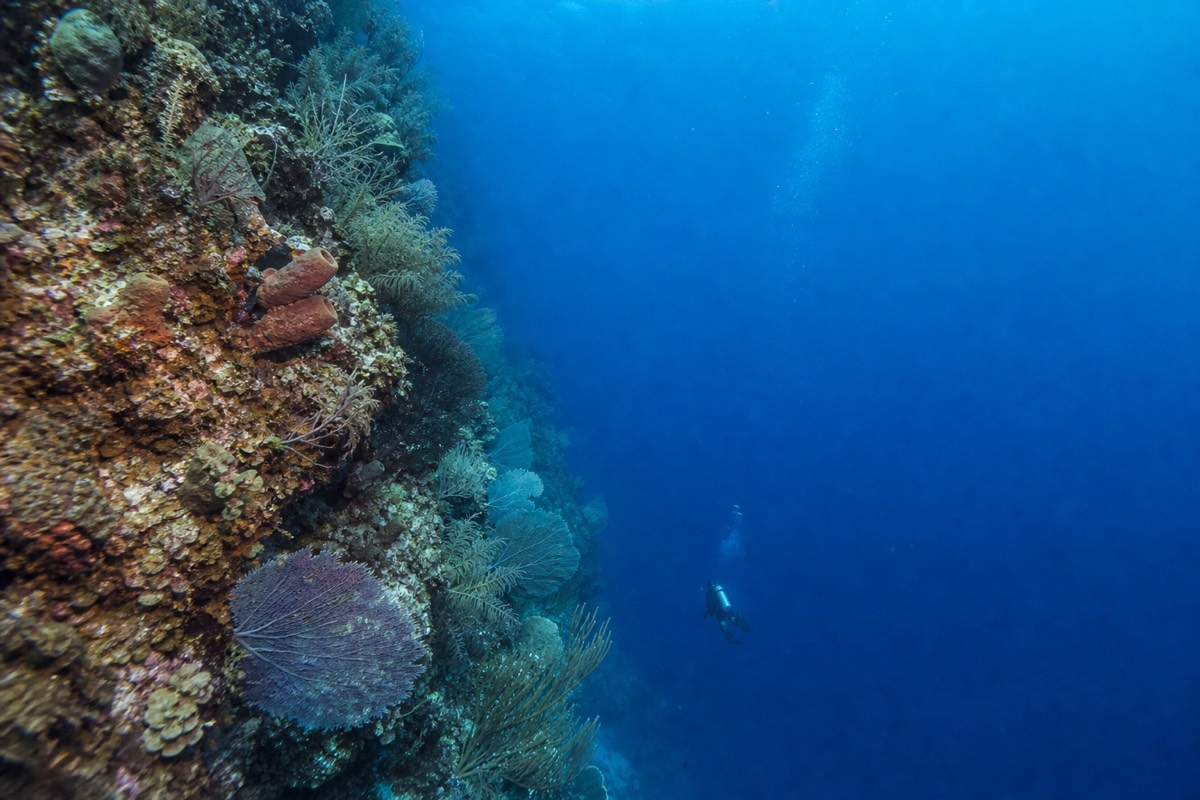
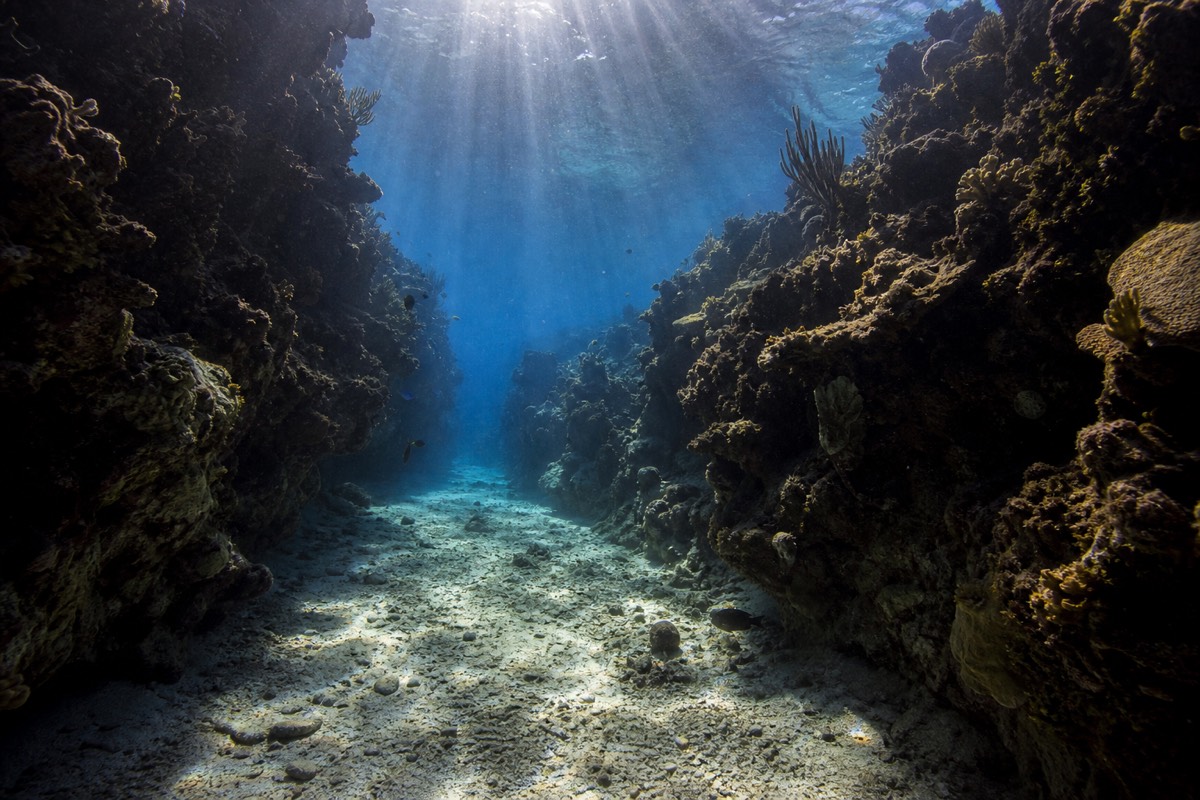
Roatan scuba diving is wall diving. The coral shelf that carries the reef ends within swimming distance of West Bay and falls away into a vertical face that reaches 30 m and beyond, cut through with deep crevices and narrow swim-throughs. The boat ride out is measured in minutes, not an hour.
That geography is the whole argument for diving here. Roatan sits along the Mesoamerican Barrier Reef, the second-largest reef system in the world. On most Caribbean islands the good stuff is a long transit offshore. Here the reef structure begins in shallow water close to the beach and the drop is right behind it, which is why an operator can run a two to three hour trip and still put you on a wall.
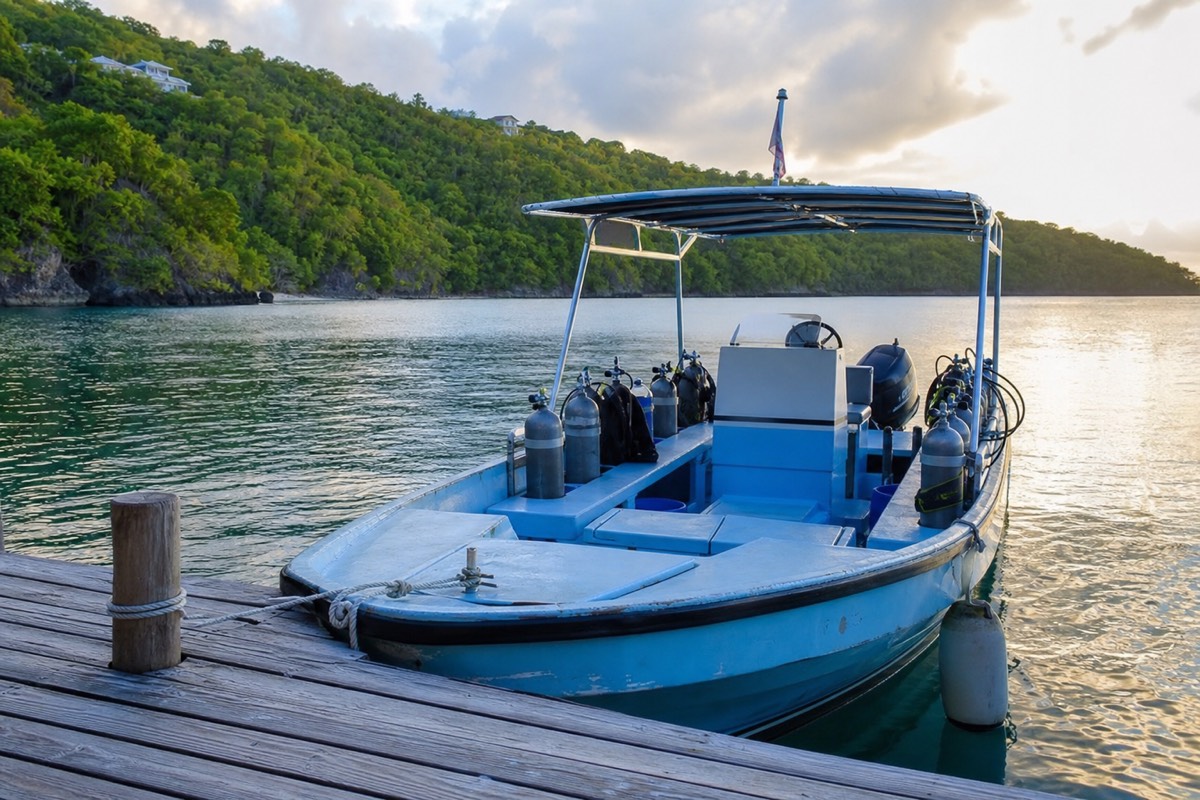
The operator behind the dive we list, Detour Roatan, describes its own product in terms of coral walls, deep crevices and swim-throughs reached minutes from the dock, on a shaded boat with a low diver-to-guide ratio and, in its own phrase, away from the cattle boats that larger fleets run. Small group, short transit, vertical terrain. It is not a training operation and it is not a resort programme with a pool session attached.
What you see in the water, according to the site's own copy across its water tours, is sea turtles, spotted eagle rays, parrotfish, groupers, conch and spiny lobster, with the occasional shark hanging in the water column just past the wall edge. Those are described as routine sightings rather than lucky ones. Bigger animals are a different question, and we answer it in our piece on when whale sharks pass through the Bay Islands.
Which Roatan dive sites will you actually be taken to?
The operator does not publish a fixed list of named Roatan dive sites. It picks on the day, based on conditions and the group, and tells you the plan at the dock briefing. What it does commit to is terrain type: coral walls, crevices and swim-throughs rather than a flat sand-and-patch-reef pootle.
We would rather say that plainly than pad this page with site names the listing never gave us. The named water sites in our own corpus belong to the snorkel trips: Blue Channel, Starfish Alley, the Prince Albert wreck, Blue Rock off West Bay, the shallow Marine Park, and French Cay Marine Park for the night trip. If you booked the dive expecting one of those by name, ask when the operator contacts you with dock coordinates after booking.
| Terrain | What it is | Who it suits | On this site that means |
|---|---|---|---|
| The wall | The shelf edge dropping to 30 m and beyond, a vertical face rather than a slope | Certified divers with settled buoyancy | The small-group reef and wall dive |
| Swim-throughs and crevices | Narrow cuts and channels in the coral structure you pass through rather than over | Divers comfortable in enclosed space and good on trim | The same dive, same trip |
| Shallow coral garden | Reef in easy depth close to shore, warm and bright | First-timers, nervous swimmers, children on the boat | The first of the three snorkel stops, the shallow Marine Park |
| The drop-off seen from above | The same wall, viewed from the surface looking down into blue | Snorkellers who want the wall without a certification card | The third snorkel stop, the drop-off |
| Night water | Torch-lit reef after dark, octopus, squid, spiny lobster, anemones | Anyone comfortable in water at night | A snorkel, not a night dive. No night dive is sold on this site |
That last row matters more than it looks. Plenty of people arrive assuming a night dive is on the menu. On this site it is not. What exists is the after-dark reef snorkel, capped at ten people, about an hour in the water with a high-power torch, and it is a different animal from a night dive.
Do you need certification for Roatan scuba diving?
Yes, for the dive we list. A recognised certification card is required to board, physical or digital, and the operator checks it. There is no on-the-day workaround, no signing a waiver instead, and no discretion at the dock. Bring the card or you do not get on the boat.
The listing states it directly: you must bring your physical or digital certification, and proof of training is what gets you aboard. A photo of the card on your phone is normally fine, and most agencies issue a digital version inside their own app, but download it before you travel rather than trusting a dock's mobile signal at 08:00.
If the card is in a drawer at home and you cannot find the digital copy, your agency can usually reissue it, but that is a job for a fortnight before the trip. And if you are certified but have not been in the water for a couple of years, say so at the briefing. A low diver-to-guide ratio is exactly the setting where a rusty diver gets looked after properly.
| Your situation | Can you board the dive? | What to do instead |
|---|---|---|
| Certified, card in hand or on your phone | Yes | Nothing. Arrive 15 minutes early for the gear fitting |
| Certified, card left at home, no digital copy | No, not reliably | Request a replacement from your agency before you travel |
| Certified but years out of practice | Yes | Flag it at the briefing so the guide plans around you |
| Not certified at all | No | An intro or Discover Scuba session with a training centre, or snorkel the same reef |
| Mid-course, referral paperwork only | No | Finish the course with a training centre, then book a fun dive |
| Not a confident swimmer | No | Neither the dive nor the snorkel boat takes non-swimmers. Book a land tour |
What to do without a scuba diving certification in Roatan Honduras
Two honest routes exist. Take a supervised intro dive, which the diving industry calls Discover Scuba Diving, run by a training centre rather than by the fun-dive operator we list. Or accept that the same wall is visible from the surface and book the snorkel instead, for roughly the same money.
The intro option is a genuine thing, not a consolation prize. PADI's own description of Discover Scuba Diving sets it out as a short supervised experience under the direct control of a professional, with no certification issued at the end. The site's own dive listing points non-certified visitors that way in its FAQ, which is unusually straight for a booking page. We do not sell that session and no operator on this site does, so you would book it separately with a dive centre, and we have no verified price to quote you for it.
The second route deserves more respect than it usually gets. The three-stop reef snorkelling trip takes you to the shallow Marine Park, the barrier reef and then the drop-off wall, 30 to 45 minutes at each stop, gear, park fees and round-trip transport included, and a private white-sand beach at the end. It starts from $85, a dollar more than the dive. On a calm day the wall from above is genuinely dramatic, and we cover where the surface sites are strongest in our roundup of the best snorkelling spots on Roatán.
How long does scuba diving certification in Roatan Honduras take?
Entry-level certification is normally taught in three parts: knowledge development you can complete online before you fly, confined-water skills in a pool or shallow bay, and four open-water dives. Most people do the in-water half over several consecutive days. Plan for a multi-day commitment, not an afternoon.
PADI's Open Water Diver page is the source to read for the actual structure and current requirements, and it is the one we would send you to rather than any island noticeboard. We are deliberately not printing a course length in days or a course price here, because no operator on this site sells certification and we have no verified figure for what a Roatan dive centre charges in 2026. Anyone quoting you a precise number without checking the centre's live rate is guessing.
What we can say about doing it on Roatan is that conditions are unusually kind for learning. Water sits in a narrow band year round, the reef starts shallow, and the sheltered north shore stays workable for most of the year even when the south side is lumpy. The trade-off is that a course eats most of your trip. Spend three of four island days qualifying and the wall dive you came for happens once, on the last day, with no spare time if the weather turns.
Our honest read: if you already know you love being underwater, certify at home before the trip and spend your Roatan days diving. If you are testing the idea, do an intro session here and certify later. Certifying on holiday is the middle path and it costs you the holiday.
What a day of Roatan scuba diving costs, line by line
The dive itself starts at $84 per person for a two to three hour trip, with high-quality gear, a professional guide, fresh water and fruit onboard and all reef park fees inside that price. Transport to the dock is not included, which is the line most people miss when they budget.
That single exclusion changes the arithmetic more than anything else here. Our own guidance puts a cross-island taxi hop from the cruise port at roughly $20 to $35, and from the airport to the West Bay and West End area at roughly $30 to $50. Fares are usually fixed rather than metered, posted at the ports, and negotiable, so agree the number before you get in. There is no Uber and no Grab on Roatan.
| Line item | What you pay | Inside the $84? |
|---|---|---|
| The dive trip, from | $84 per person, 2 to 3 hours | The fare itself |
| Tanks, weights and rental gear | $0 | Yes |
| Professional dive guide | $0 | Yes |
| All reef park fees | $0 | Yes |
| Fresh water and fruit on the boat | $0 | Yes |
| Taxi to the dock | Allow $20 to $35 from the cruise port area | No, stated as not included |
| Taxi back afterwards | Allow $20 to $35 again | No |
| Tips for the dive crew | Allow $10 to $20 for the day | No |
| Lunch or a meal | No published figure. Budget your own | No, meals are excluded |
| Underwater camera rental | No published figure | No |
| Travel or dive insurance | Your own arrangement | No |
| Realistic all-in day | $134 to $174 per person | Before food |
Two people travelling together soften that, because the taxi splits: a couple diving together lands nearer $109 to $129 each. Bring small USD bills for all of it. The island runs largely on US dollars, lempiras circulate alongside, and plenty of taxis and small businesses either will not take a card or add a fee.
Roatan scuba diving or snorkelling the same reef?
The wall is visible from the surface, so the honest comparison is not access versus no access. It is depth, time and terrain versus cost, hassle and eligibility. Diving buys you the crevices and swim-throughs. Snorkelling buys you a longer day, three sites and a beach, for one dollar more.
| The small-group reef and wall dive | The three-stop reef snorkelling trip | |
|---|---|---|
| From | $84 per person | $85 per person |
| Length | 2 to 3 hours | About 4 to 4.5 hours |
| Entry requirement | Certification card, checked at the dock | Able to swim, under 70 |
| Where you end up | Coral walls, deep crevices, swim-throughs | Shallow Marine Park, barrier reef, then the drop-off wall |
| Time actually in the water | The dive plan, plus a surface interval on the shaded deck | 30 to 45 minutes at each of three stops |
| Transport to the start | Not included, budget a taxi | Round-trip transport included from either port |
| Group feel | Small group, low diver-to-guide ratio | Boat group with a driver and snorkel guides |
| Rating on the listing | 4.2 on GetYourGuide | 4.8 on GetYourGuide |
| Booked to date | 355+ | 828+ |
| Ends with | Back at the dock | A private white-sand beach with a bar on your own tab |
A pattern falls out of that table. For a certified diver with a spare morning, the small-group reef and wall dive is the better use of the water. For anyone else, the snorkel is the better-value day and the better-rated product, and it includes the transport line that sinks the dive budget. We argue that case at length in our post on whether the diving justifies the cost.
When are Roatan dive sites at their calmest and clearest?
January through March gives the highest chance of glassy water and long visibility. April to June brings the most active reef life and the most punishing midday heat. July to October is the wettest and the most likely to have a dive moved or cancelled by the captain. November is the quiet value month.
We should flag an inconsistency in our own source material rather than paper over it. The tour pages call January to March the clearest window. The homepage instead names March to June and again September to October as the calmest seas and best visibility, and separately calls November the single best month of the year, with May second. Those do not fully agree.
The version both sides support: January to April is the most reliable weather and the busiest, November and May are the value sweet spots, and July to October is the gamble. Temperatures run roughly 21°C to 29°C year round anyway, so this is a question about sea state and crowds, not about being cold.
| Window | What the water tends to do | The trade-off | Our read for divers |
|---|---|---|---|
| January to March | The best odds of glassy, calm water and long visibility | Highest cruise volume of the year, heaviest crowds ashore | Best conditions, book about a week ahead, expect company |
| April to June | Most active reef life, large schooling fish reported | Intense midday heat and humidity on the boat | Strong. Take the morning slot and use the shaded deck |
| July to October | Greenest island, higher rainfall, occasional swell | Dives are weather-dependent and can be moved or dropped | Cheapest and quietest. Build a spare day into the trip |
| November | Rain dropping sharply, sea around 28°C, low humidity | Shoulder season, some operators run reduced schedules | The value pick. Very low cruise traffic, prices 20 to 40% below peak |
| December | Good weather | Cruise traffic climbs steeply from mid-month | Fine early in the month, crowded after |
The north shore stays sheltered for most of the year, which is why a dive can still run on a day the south side looks unusable. If you are picking travel dates around water conditions generally, our breakdown of the best time of year to visit Roatán goes month by month.
What to bring on a Roatan scuba diving day
The operator supplies gear, guide, water, fruit and all park fees. You supply the certification card, swimwear, a towel and cash. Towels are not provided on most of the water tours here, and enough people arrive without one that it is worth saying twice.
| Item | Provided? | Why it matters |
|---|---|---|
| Certification card, physical or digital | No, yours | Required to board. No card, no dive |
| Regulator, BCD, tanks, weights | Yes | High-quality gear is inside the $84 |
| Swimwear, worn under your clothes | No | There is no comfortable changing window at the dock |
| Towel | No | Three of the site's water tour pages tell you to bring your own |
| Your own mask, if you own one | Rental supplied | A mask that already fits your face beats any rental |
| High-SPF waterproof sunscreen and SPF lip balm | No | Surface intervals on an open deck near the equator |
| Small USD bills | No | Taxis, tips and beach bars often will not take a card |
| Waterproof phone case or dry bag | No | Nothing on a small boat stays dry by accident |
| Motion-sickness tablets | No | Short transit, but a surface interval on a rocking deck is the test |
| Reusable 1 L water bottle | Fresh water onboard | Heat, humidity and dry compressed air add up fast |
| Water shoes or grippy sandals | No | Docks and boat decks, both wet |
Arrive at the dive centre 15 minutes before the start time. The gear fitting and safety briefing happen in that window, and turning up on the hour means the boat waits for you or leaves without you.
Who cannot dive: the exclusions the operator publishes
The listing rules out non-swimmers and anyone with heart or respiratory issues, flatly and without qualification. Certification is separately mandatory. Everything else, including pregnancy, is not addressed on the page, which means you ask the operator rather than assume.
We are being precise on purpose, because the exclusions differ between the water tours here and people conflate them. The over-70 cut-off belongs to the snorkel trip, not the dive. The under-1 exclusion belongs to the night snorkel.
| Situation | The published position | What to do |
|---|---|---|
| Not a confident swimmer | Not suitable for the dive. Also excluded from the three-stop snorkel | Choose a land-based day instead |
| Heart condition | Not suitable | Do not book. Talk to a dive physician if you want a real answer |
| Respiratory condition, including asthma | Not suitable | Same. This is a medical question, not an operator one |
| No certification card | Cannot board | Intro session with a training centre, or snorkel |
| Aged over 70 | Not stated on the dive listing. The three-stop snorkel does exclude over 70 | Ask the dive operator directly when they contact you |
| Pregnant | Not addressed on the dive listing | Ask your doctor first, then the operator |
| Flying within the next day | Not an operator rule, but a real safety limit | See the next section before you book anything |
| Young children | Certification requirements apply regardless of age | The snorkel boat welcomes all ages with child life jackets |
Can a cruise passenger fit Roatan scuba diving into a port day?
It is possible and it is tight, and the operator does not include transport to the dock or run a ship-departure guarantee on this product. Do the arithmetic before you book: the dive is 2 to 3 hours, plus two taxi legs, plus gear fitting, against an all-aboard that is typically 16:30 to 17:30.
Here is the sum. Say doors open at 08:00 and all-aboard is 16:30. You want to be back at the pier by 15:00, because taxi traffic near the port slows down and the site's own advice is to return one to two hours before all-aboard. That leaves seven hours ashore. Take out 30 to 40 minutes each way for the taxi, 15 minutes for the gear fitting and briefing, and up to three hours for the trip. You are at roughly four and a half hours committed, with two hours of slack and no guarantee behind you.
Two hours sounds fine until the boat waits on a late diver, the captain moves the site because of swell, or you land on one of the days when three to five large ships are in at Mahogany Bay and Coxen Hole together and every taxi rank on the west end is a queue. December to April and July to August are the heaviest periods. If you do not yet know where your ship berths, start with which cruise terminal your ship uses: they are different places with different taxi runs.
Our honest read: if you are on a port call and you are not already an unflappable diver, book the snorkel. It includes round-trip transport from either port, and its operator asks you to exit the ship 30 minutes after doors open specifically to beat the big shore excursions to the reef. If you are staying several nights, none of this applies and the dive is easy.
Flying after diving, and why it ends more dive plans than weather
You should not fly immediately after diving. Surface interval before altitude is a decompression safety matter, not a superstition, and the recommended wait is measured in hours rather than minutes. That single rule rules out diving on the morning of your departure flight.
Divers Alert Network is the reference the diving world uses for flying-after-diving guidance, and it is worth reading their current recommendation directly rather than taking a number off a forum, because the guidance differs for a single no-decompression dive versus several days of diving. Whatever the current figure, the planning implication is stable: the dive goes near the start of your trip, never at the end.
Cruise passengers get the same problem in a different shape. A ship is at sea level, so the dive itself is not the issue, but a cruise that ends with a flight home the next morning puts your last dive day uncomfortably close to altitude. And if you have an afternoon flight out of Juan Manuel Gálvez International in Coxen Hole, that morning belongs to breakfast and the reef seen from the beach, not to a tank.
Reverse the itinerary and it solves itself. Land, dive on day two or three, then keep your final day dry. That ordering also gives you a spare day if the captain calls off a dive for weather, which between July and October is a real possibility rather than a hypothetical.
How to judge the best Roatan dive shops
We list one dive product, so we are not going to pretend to rank the island's dive centres. What we can give you is the set of things worth checking, because the difference between a good Roatan day and a mediocre one is mostly group size, guide attention and whether the operator will call off a dive it should call off.
Group size first. The reason our listed operator sells itself on being away from the cattle boats is that a wall with swim-throughs is a poor place to be twelfth in a line. Ask how many divers per guide, and treat a vague answer as an answer. Then ask what happens when conditions are marginal. An operator that has ever cancelled a dive on you for weather is one worth returning to.
Third, look at what the price contains. On the product we list, gear, guide and all reef park fees are inside the fare and transport is not. Elsewhere the split may run the other way, and a cheaper headline number with park fees bolted on at the dock is not cheaper.
Fourth, look at where the boat leaves from relative to where you are sleeping. West End and West Bay are the two main visitor areas and both sit 20 to 35 minutes from either cruise port or the airport, but they are not the same place to base yourself, and we compare them in how West End compares with West Bay. A dock ten minutes from your room is worth real money once you multiply it by taxi fares.
Finally, be careful with ratings. The dive we list carries 4.2 with 355+ bookings, the lowest score in the site's water set. That is a rating on a listing, not a review count, and this site publishes no review counts at all, so read it as a prompt to ask questions rather than as a verdict. The rest of the guided Roatán tours we list is small enough to compare in one sitting.
The no-touch rules that keep these dive sites worth visiting
Touching coral or marine life is forbidden on the dive we list, and this is not the operator being precious. Reef contact damages the animal you are touching, and the reef here sits inside a marine protected area with rules the guides enforce in the water.
The Roatán Marine Park is the organisation behind that protection, and its work on mooring buoys, patrols and reef stewardship is why a wall ten minutes from a cruise berth still looks like a wall worth diving. Corals are living colonies under measurable stress: NOAA's explainer on coral bleaching lays out what heat stress does to them, and a reef already dealing with that does not need a fin kick as well.
In practice the rules are simple. Nothing touches the reef, including your fins, your gauges and your camera. You do not chase, corner or ride anything, and you do not move an animal for a photograph. Keep your buoyancy honest, hover rather than settle, and let the guide place you.
Above the water the same principle now has legal teeth. Honduras restricted the handling of wildlife for exhibition and photographs in 2025, and Roatan's sanctuaries changed accordingly. The reef version of that rule has been in force far longer, and it is enforced by the people on your boat. Follow it and the diving stays this good.