Roatán Sloth & Monkey Sanctuaries: What to Expect
Roatán has several wildlife parks rather than one, they cost between $45 and $99 inside a tour, and since March 2025 nobody on the island can hand you a sloth.
Booking Choice: Choose a focused sanctuary visit or the second activity you actually want. Explore Sloth And Monkey Sanctuary Excursion ↗
Price tables and illustrated budgets below are historical planning examples from the earlier guide. The current booking options may be different products; check their dates, inclusions and final prices before comparing costs.
What a sanctuary stop costs inside each tour
Prices are the operators' own published starting rates as listed on this site, read off their listings in August 2026, and the hours are the listed tour lengths. Confirm the live price and duration before booking.
What changed at every Roatán sloth sanctuary in 2025?
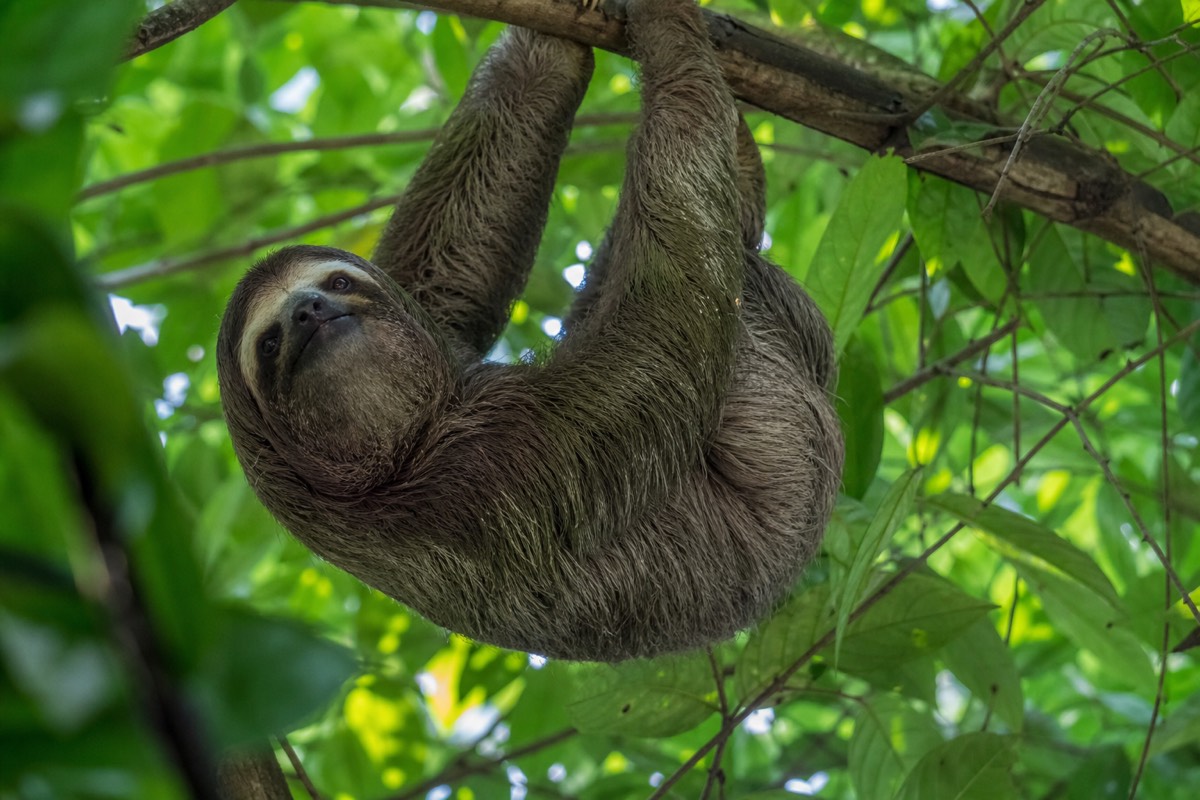
Since 1 March 2025 you cannot hold, hug or carry a sloth on Roatán. Honduras's wildlife authority issued the document behind the change on 24 January 2025, restricting the handling of wildlife for exhibition and for photographs. Visiting, standing close, watching and photographing all continue exactly as they did before.
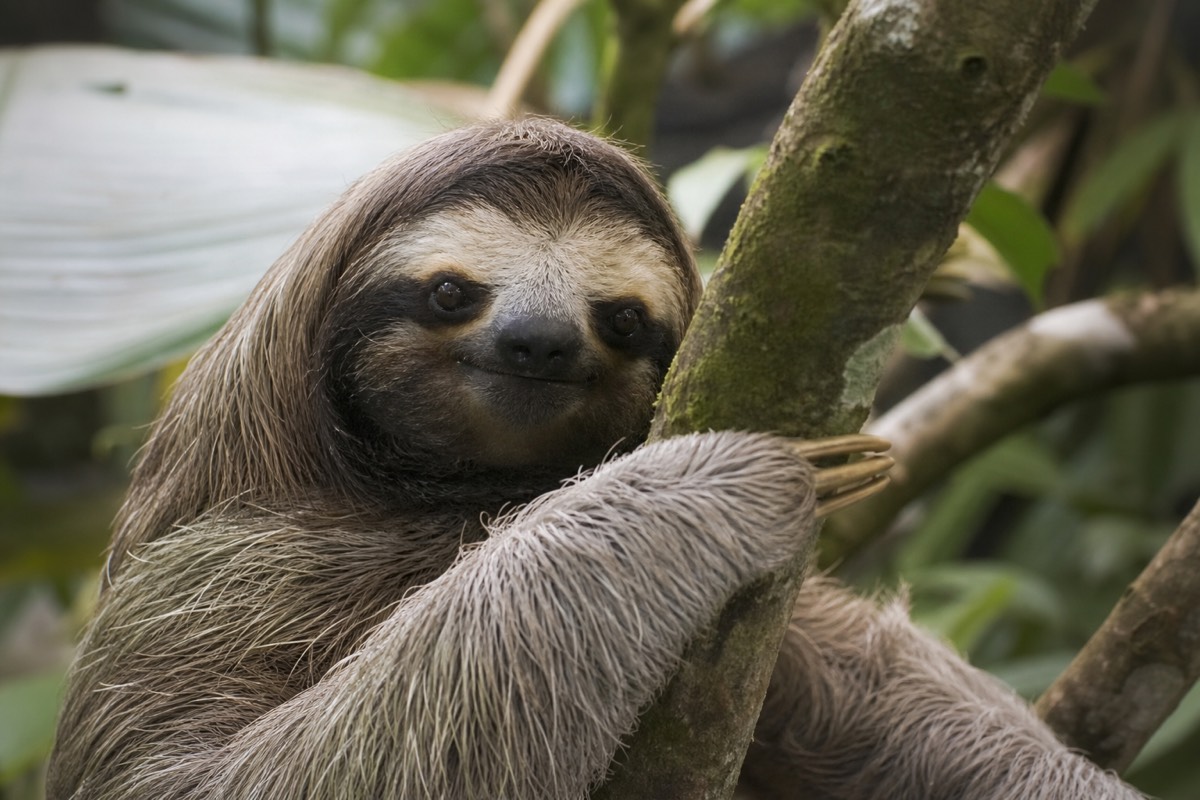
The agency behind it is the ICF, the Instituto Nacional de Conservación y Desarrollo Forestal, Áreas Protegidas y Vida Silvestre. Its wildlife department described the problem as the over-manipulation of wildlife, and defined that specifically as carrying and holding animals so that visitors can be exhibited with them or photographed with them. The document is dated 24 January 2025. Enforcement on Roatán began on 1 March 2025, which is why so many trip reports from the first half of that year read like two different islands depending on when they were written. If you want the agency itself rather than a travel write-up, the ICF is the Honduran authority that issued it.
Cruise lines had to react quickly, because sloth handling had been sold in excursion descriptions for years. Royal Caribbean and Carnival both revised their Roatán shore excursion wording, and passengers who had booked months earlier found the promise quietly gone. The port ban that surprised cruise passengers in March 2025 and the reporting on the wildlife interaction ban taking effect are both worth reading if you booked a package that still mentions holding.
The operators we work with put it plainly on their own listings. The FAQ on the dedicated sanctuary excursion answers the question in one line: "Can I hold the sloths? No, per 2026 Honduran law, holding sloths is not permitted, but you will get very close for photos." Two of the private day tours phrase it as regulations that no longer permit sloth hugging, followed by an invitation to observe and photograph instead. That is the current reality at every sanctuary on the island, not a policy that varies by operator.
| What visitors ask about | Before 1 March 2025 | Now |
|---|---|---|
| Holding a sloth for a photo | Widely advertised, often the headline of the excursion | Not permitted anywhere on Roatán |
| An animal placed in your arms by staff | Common practice | Not permitted; handling for exhibition and photographs is what the rule targets |
| Photos and selfies | Yes | Yes, with the animal where it is |
| Standing close to sloths and monkeys | Yes | Yes, and this has not changed |
| Monkeys and parrots | Handled for photos | Covered by the same restriction on handling |
| Guided talks, rescue stories, conservation context | Part of the visit | A bigger part of the visit than before |
| Cruise line excursion descriptions | Mentioned holding | Rewritten by Royal Caribbean and Carnival among others |
Old descriptions have a long half life. Blog posts, forum threads and package pages written before the change are still online and still promise the hug, which is why this question keeps resurfacing. We wrote a separate piece on the 2025 sloth-handling rule change for readers who want the dates, the trigger and the cruise line reaction in one place.
Which sloth and monkey sanctuaries does Roatán actually have?
Roatán has several wildlife parks rather than one. Daniel Johnson's Monkey and Sloth Hangout is the most frequently named, Gumbalimba Park pairs animals with a zip line and a private beach, Mayan Eden Eco Park sits on the east end, Jungle Top runs a smaller sanctuary, and two operators use the name Mayan Jungle Animal Sanctuary for their stop.
This matters more than it sounds, because a lot of tour listings simply say "a wildlife sanctuary" without naming which one. The park you visit determines how long you are there, whether a zip line or a beach club is attached, and how many other groups are moving through at the same time. If the listing does not name it, ask the operator before you book rather than after.
| Sanctuary | What it is | Typical visit | How you reach it |
|---|---|---|---|
| Daniel Johnson's Monkey and Sloth Hangout | Free-ranging rescued capuchins, sloths, scarlet macaws and parrots on a family-run property | 60 to 90 minutes | The most commonly bundled stop on island tours, or a short taxi from West Bay |
| Gumbalimba Park | Monkeys, sloths and parrots plus a zip line course of 10 to 14 lines and a private beach | 1 to 2 hours with the animals, 45 to 90 minutes on the zip line | Not the named stop on any tour listed here; reachable by taxi, or built into a fully custom private day with park entry paid separately |
| Mayan Eden Eco Park | Monkeys, sloths, butterflies and exotic birds on the island's east end | About 1 hour guided | The sanctuary half of the ATV jungle ride |
| Jungle Top | A smaller sanctuary with sloths, capuchins and scarlet macaws | The whole tour runs about 2 hours | The stop on the guided jungle wildlife tour |
| Mayan Jungle Animal Sanctuary | The name two private-day operators use for their wildlife stop: sloths, monkeys, macaws | Part of a 5-hour private day | Included in the two private West Bay day tours |
| AJ's | Named once on our homepage as an example alongside Gumbalimba; we do not have detail we can stand behind | Not established | Not a stop on any tour we list |
We are deliberately not calling one of these the ethical choice and another the bad one. We have no audit, no inspection record and no independent welfare assessment for any of them, and inventing a ranking would be worse than admitting that. What we can compare honestly is what each one includes, how long you get, how busy it tends to be and what it costs, which is what the rest of this guide does.
What do you actually see at a monkey and sloth sanctuary on Roatán?
Rescued capuchin monkeys, sloths moving through the lower canopy, scarlet macaws and parrots at every sanctuary named above, with howler monkeys, iguanas, coatis and butterflies appearing at some. The capuchins are the surprise for most visitors: at Daniel Johnson's they are free-ranging inside the property and approach people on their own terms.
Our own long-form description of that stop is unusually blunt about the effect. The rescued capuchins genuinely interact at close range, sitting on shoulders, investigating bags, making the kind of direct eye contact that produces both delight and a small amount of discomfort, because you are clearly being assessed by an animal that is as curious about you as you are about it. The sloths do the opposite. They move through the branches with complete indifference to everything happening around them, which is precisely the appeal.
What has changed is the choreography, not the cast. Nobody hands you an animal now. A capuchin that climbs onto a visitor of its own accord is a different thing from a member of staff placing an animal on someone for a photograph, and it is the second one the rule removed. Do not ask for it, do not tip for it, and do not book on the basis of a listing that still promises it.
| Species | Where it turns up | What it does | Photo reality |
|---|---|---|---|
| Sloths | Every sanctuary named here | Move slowly through the lower branches, largely unbothered by visitors | Close-up photos and selfies with the sloth where it is, no handling |
| Capuchin monkeys | Daniel Johnson's, Gumbalimba, Mayan Eden, Jungle Top | Free-ranging on the property, curious, quick, interested in bags and straps | They set the distance, not you; keep the camera ready rather than staged |
| Howler monkeys | Named in our sanctuary descriptions | Much less interactive than the capuchins, heard as often as seen | Distance shots |
| Scarlet macaws | Daniel Johnson's, Jungle Top, the private-day sanctuary | Loud, colourful and, by the operators' own account, entertaining | The most vivid colour in your photo set |
| Parrots | Daniel Johnson's, Gumbalimba | Free-roaming around the paths | Easy shots, no arrangement needed |
| Iguanas and coatis | Sometimes, depending on the park | Wander the gardens | Opportunistic |
| Butterflies and exotic birds | Mayan Eden Eco Park | A separate part of the guided hour | Slow work, worth it if you have patience |
How long does a Roatán sloth sanctuary visit take?
Budget 60 to 90 minutes inside Daniel Johnson's, about an hour for the guided visit at Mayan Eden Eco Park, and roughly 2 hours in total for the short guided jungle wildlife tour that uses Jungle Top. Add 15 to 20 minutes of transfer each way on the dedicated sanctuary excursion, and considerably more from the east end.
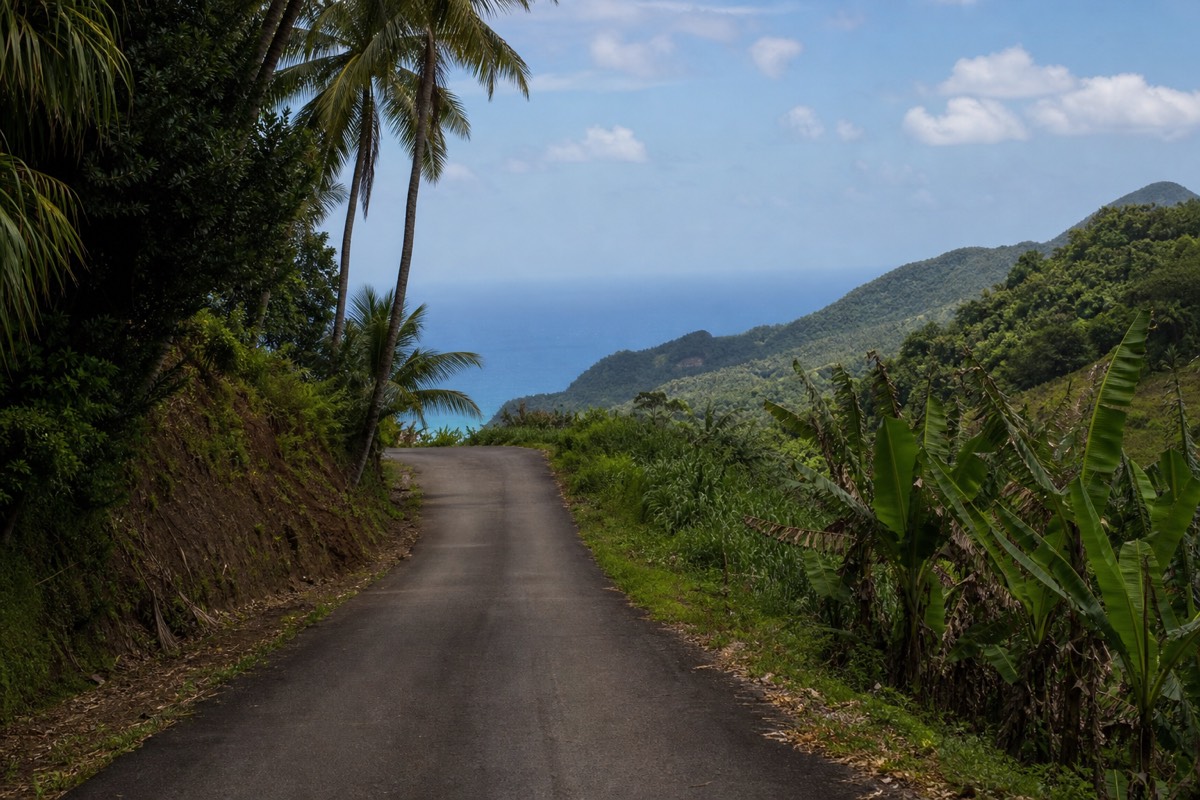
Those are the numbers the operators publish, and they are honest ones. The sanctuary itself is not a long activity. What stretches it into a half day is everything bolted on around it: a zip line course, a reef snorkel, an ATV run, a beach club, a chocolate and rum tasting. That is why the standalone excursion runs 3 hours door to door while the combos run 4 to 5.
For cruise passengers, the arithmetic is what matters. Several operators use a meeting formula of ship arrival plus one hour. If your ship docks at 08:00, you are moving by 09:00, at the sanctuary by 09:20, and finished with the animals before 11:00 with the rest of the day still open. All-aboard is typically 16:30 to 17:30, and returning one to two hours before that is the sensible margin. The sanctuary is one of the few Roatán activities that genuinely fits into a tight window without feeling rushed.
Which Roatán tours include a sanctuary stop, and what else comes with it?
Six of the tours listed on this site build a wildlife sanctuary into the day, from a 2-hour guided visit at $45 to a 5-hour ATV combination at $99. The sanctuary portion is broadly similar across all of them. What you are really choosing between is the second half of the day: zip lines, reef snorkelling, an ATV run or beach time.
| Tour | Sanctuary | From | Hours | What else is in it | Listing |
|---|---|---|---|---|---|
| Guided jungle wildlife tour | Jungle Top | $45 | 2 | Private and customisable; can extend into local schools, markets, a rum and chocolate tasting or West Bay | 4.6 on TripAdvisor, 438+ booked |
| Sloth and monkey sanctuary excursion | A dedicated sanctuary, not named on the listing | $49 | 3 | Private AC transport, bilingual guide, entrance fees, rescue stories and a conservation talk | 4.7 on Viator, 538+ booked |
| Super Man zip line, sanctuary and beach | Daniel Johnson's | $69 | 4 to 5 | 16 zip lines, 24 platforms, 3 bridges, then a private beach club | 4.7 on GetYourGuide, 401+ booked |
| Sanctuary visit plus snorkel | Daniel Johnson's | $75 | 4 to 5 | Hilltop photo stop, rum and chocolate factory samples, Foster's West Bay beach club, boat out to the reef | 4.3 on GetYourGuide, 1,448+ booked |
| Private West Bay day tour | Mayan Jungle Animal Sanctuary | $88 | 5 | Private van, resort day pass with chair, pool, shower and Wi-Fi, 45-minute guided snorkel at Blue Rock | 4.9 on TripAdvisor, 1,689+ booked |
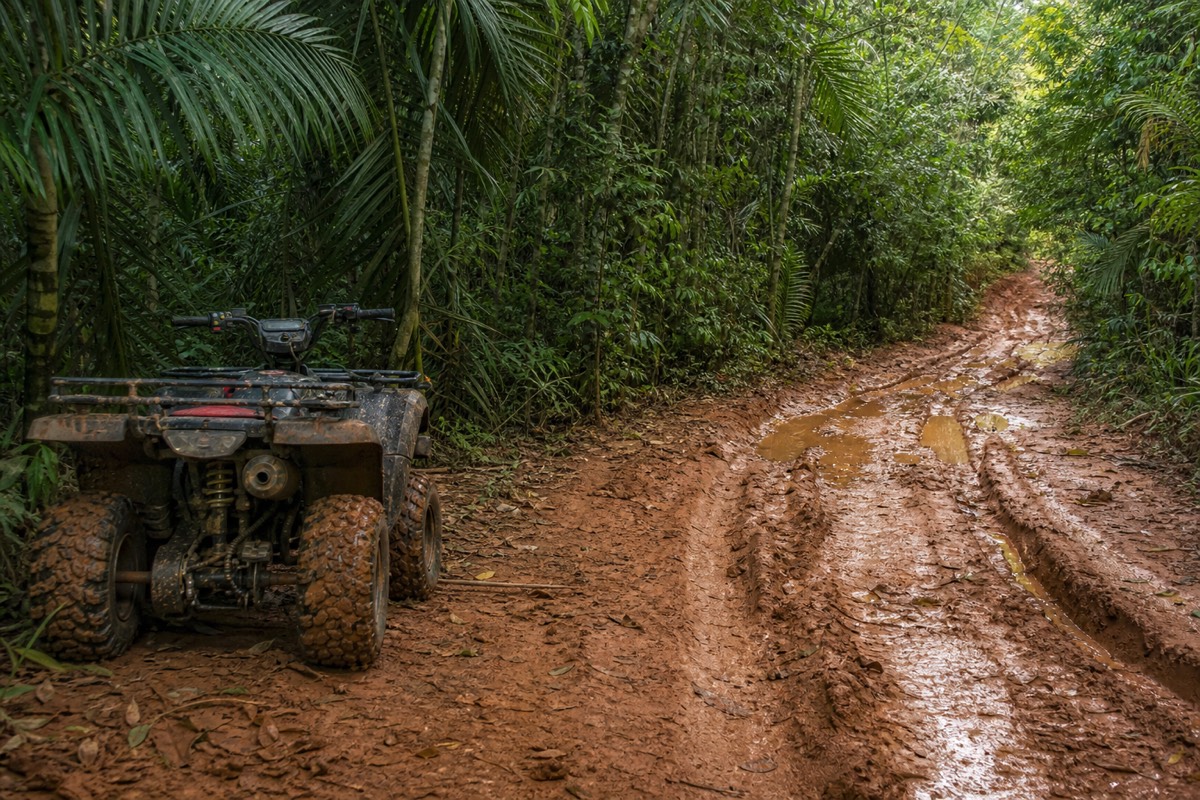
| ATV jungle ride plus sanctuary | Mayan Eden Eco Park | $99 | 4 to 5 | 1 hour guided at the park, then 2 hours of guided ATV through villages, mountain trails and coastal beaches | 4.7 on Viator, 4,625+ booked |
The cheapest and simplest of the set is the sloth and monkey sanctuary excursion, which does one thing and drives you home. It is the only option here where the animals are the entire product rather than an act in a longer show. The operator flags a morning window of 07:00 to 09:00 as the point where the animals are most active and the heat is lowest, and that is consistent with everything else we know about the island's tour timing.
At the other end, the ATV jungle ride with the sanctuary stop is the single most booked tour on this site, which tells you something about how well the pairing works. It also has the most conditions attached: it starts from the Roatan Island Flavor restaurant, the trails get muddy after rain, and the operator does not recommend it in pregnancy or with back or heart problems.
Between them sits the 16-line Super Man zip line tour, which is the cheapest way to get a zip line course and a sanctuary into the same morning, and the sanctuary visit with a West Bay snorkel, which trades the adrenaline for a boat ride out to the reef. If two hours is all you want to commit, the two-hour guided jungle wildlife tour is the short version, and it is private, so the itinerary bends around what your group actually wants.
What does the $49 sanctuary excursion buy that the $99 ATV combo does not?
Time and quiet. The $49 excursion spends its entire three hours on transport and the animals, so the sanctuary is not competing with a zip line queue or a two-hour ATV run for your attention. The $99 combo buys two genuinely different experiences in one morning, which is better value per hour but a busier day.
Work it through in hours rather than headline prices. The dedicated excursion is roughly $16 an hour and about half of that time is with the animals. The ATV combo is roughly $20 an hour across four to five hours, with one hour at Mayan Eden and two hours on the machines. The zip line combination at $69 for four to five hours is the cheapest per hour of the three, at around $15, because the zip line course carries most of the day. None of these numbers is a value judgement on its own. They just tell you what you are paying for.
The second variable is what you already have booked. Plenty of visitors arrive with a zip line or a snorkel already on the itinerary, and buying a combo means paying twice for the same thing. Our honest read is that the standalone excursion is the better purchase for anyone with a full day planned elsewhere, and the combos are the better purchase for a cruise passenger with one shot at the island. If you are weighing up the aerial half specifically, we set out the courses, heights and minimum ages in the guide to Roatán's zip line and ATV courses, and we answer the value question directly in our piece on whether the zip line course is worth it.
Can you skip the tour and pay at the sanctuary gate?
Yes. Entry paid at the gate runs about $40 to $60 per person at the parks our corpus covers, and a taxi from West Bay is roughly $20 to $30 one way. That makes an independent visit realistic, but it is not automatically cheaper once transport and two-way taxi time are counted.
Run the numbers for a couple. Two gate entries at $50 each is $100. A taxi out and back from West Bay at $25 each way is $50, split between you. That is around $150 for two people, plus whatever getting to West Bay from the port costs: roughly $10 to $20 per person from Mahogany Bay over 20 to 30 minutes, or $15 to $25 per person from Coxen Hole over 25 to 35 minutes. Set that against $49 per person for a booked excursion with private air-conditioned transport, entrance fees and a bilingual guide included, and the gap narrows to almost nothing.
Three practical points if you go independently anyway. There is no Uber and no Grab on Roatán, so it is traditional taxis, colectivos or a pre-booked transfer; agree the fare before you get in, because rates are usually fixed rather than metered and the port rates are posted. Carry small US dollar bills, since many small operators and drivers do not reliably take cards. And the ship departure guarantee that comes with a booked tour does not apply to anything you arrange yourself, which is the real cost of the do-it-yourself route on a port day. We lay out how a self-directed day fits together in a worked one-day cruise itinerary.
When is the best time to visit a sloth sanctuary in Roatán, Honduras?
The first hour after opening, without much competition. The parks are most intimate before the coach groups arrive, the capuchins are active, and the guides have time for a real conversation about the rescue programme. By early afternoon on a multi-ship day the same park is cycling groups of 20 to 50 people through in waves.
Our own description of Daniel Johnson's is specific about this. The first hour after opening is when the group moving through with you is small enough that the interaction feels personal rather than managed. The afternoon version, with three coach loads of cruise passengers passing through, is a different experience in the same place with the same animals. Nothing about the park changes. The density does.
| When you arrive | What the sanctuary is like | Best for |
|---|---|---|
| First hour after opening | Small groups, active capuchins, unhurried guides, lowest heat | Photography, anyone travelling with a nervous child, repeat visitors |
| Mid-morning, roughly 09:00 to 11:00 | The main tour window; groups arrive in waves but the park is spread out | Cruise passengers on a ship-arrival-plus-one-hour pickup |
| Midday to mid-afternoon on a multi-ship day | Groups of 20 to 50 cycling through, short waits at the popular spots | Nobody in particular; it is the version most people describe as touristy |
| After 15:30 | Thinning out as passengers head back for a 16:30 to 17:30 all-aboard | Land-based visitors staying on the island, not cruise passengers |
| A day with four to six large ships in | The busiest the island gets; popular activities can run out of capacity | Avoid if your dates are flexible |
Roatán takes three to five large ships on a busy day and four to six on the worst ones, and December to April plus July to August are the heaviest stretches, with mid-week and weekends busier inside those. If your dates move at all, checking which ships are in port on a given date before you book is fifteen seconds well spent. Season matters less here than time of day: the sanctuaries are a land activity, so rain shifts the mood rather than cancelling the plan, and the April to June window is when the operators report the birds and monkeys at their most active.
Is a Roatán sloth sanctuary ethical? Our honest read
We cannot audit any of these facilities, so we will not tell you one is ethical and another is not. What we can say is that the 2025 rule removed the single most criticised practice, handling for photographs, at every park on the island at once, and that the trafficking problem behind the rule was real and documented.
The trigger the ICF cited was a sharp rise in illegal trafficking, mismanagement and over-manipulation of wildlife on Roatán. The specific incident that preceded the document was a rescue on 14 January 2025 at the La Ceiba cabotage dock, where five sloths captured in La Mosquitia were intercepted on their way to Roatán. That is the context worth carrying into a park visit: demand for close contact was pulling animals out of the wild on the mainland.
The parks themselves are described in the material we hold as rescue operations with veterinary care and open enclosures rather than chains, and the guides spend real time on the rescue and conservation story rather than treating the animals purely as a photo opportunity. The counter-argument, which honest visitors do raise, is that close contact with habituated animals is not automatically fine just because it is well run. Both things can be true. Since March 2025 the gap between the two positions has narrowed considerably, because the part people objected to most is simply no longer on offer.
Practical version: go in the morning, take the guide's talk seriously, do not ask staff to bring an animal to you, and do not tip for special access. If you want a wildlife day with no handling question attached at all, the mangrove tunnel tours on the east end put you in a canoe boat through the tunnels and a Garífuna village instead.
What should you wear and bring to a monkey and sloth sanctuary?
Snug clothing without loose straps, no perfume or cologne, closed comfortable shoes, high-SPF sunscreen and small US dollar bills. The capuchins are free-ranging and quick, and the operators are explicit that dangling straps, sunglasses on cords and jewellery are the things that get investigated.
The perfume advice is not decoration. Sanctuary staff ask visitors to avoid strong scent because the animals have sensitive senses and the point of the visit, especially post-2025, is minimising stress rather than maximising contact. Neutral is the target.
| Item | Why | How firm |
|---|---|---|
| Snug clothing, no loose straps or dangling jewellery | Curious capuchins tug at whatever hangs | Operator instruction |
| No perfume or cologne | Sensitive senses; the visit is built around keeping the animals calm | Operator instruction |
| Closed, comfortable walking shoes | The parks are garden paths and slopes, muddy after rain | Strongly advised |
| High-SPF waterproof sunscreen, hat, polarised sunglasses | Open sections in 28 to 33 degree heat with high humidity | Strongly advised |
| Insect repellent | Sandflies and mosquitoes, particularly at the edges of the day | Advised |
| 1 litre reusable water bottle | Lunch and drinks are extra on most of these tours | Advised |
| Small US dollar bills | Cash rules on Roatán; gate entry, drinks and tips of roughly $10 to $20 for the day | Practical necessity |
| Your own towel and swimwear | Three of the sanctuary tours finish at a beach club and none of them provide towels | Only if your tour includes beach time |
| Camera or phone, charged | Professional photo prints are not included on any of these tours | Obvious but frequently forgotten |
Can you visit a Roatán sloth sanctuary with a wheelchair, a scooter or a stroller?
Partly. The sanctuaries themselves have no height or weight restrictions and welcome all ages, but the tours that reach them differ sharply: the private West Bay day tours are listed as wheelchair accessible, while the dedicated sanctuary excursion and the zip line combination are not.
The port itself is the first obstacle, and it is worth solving before the tour starts. At Mahogany Bay the walk out goes uphill over a concrete hill to the main security gate, and operators tell wheelchair and scooter users to take the $2 taxi over the hill rather than attempt it. At Coxen Hole you exit through Gate #3 and the meeting points are across the street, which is a much flatter proposition. Which terminal you get is set by your cruise line rather than by you, so check it before you book a tour with any mobility requirement attached.
| Tour | Accessibility as the operator states it |
|---|---|
| Sloth and monkey sanctuary excursion, $49 | Not wheelchair accessible |
| Super Man zip line, sanctuary and beach, $69 | Not suitable for wheelchair users |
| Sanctuary visit plus snorkel, $75 | Listed as wheelchair accessible, but not suitable for significant mobility impairments because of the boat and snorkel transitions |
| Private West Bay day tours, $88 | Wheelchair accessible; infants travel on laps and you bring your own infant seat |
| ATV jungle ride plus sanctuary, $99 | Not advised in pregnancy or with back or heart problems |
| Guided jungle wildlife tour, $45 | Port pickup and AC van; at Mahogany Bay wheelchair and scooter users are directed to the $2 taxi over the hill |
| The sanctuaries themselves | All ages, no height or weight restrictions, adult supervision for small children |
Does a sanctuary visit still work with young children?
It is one of the few Roatán activities with no age floor at all. Sanctuaries take all ages with no height or weight restrictions, which is a sharp contrast with the zip lines, where the minimum is typically 8 to 10 years or about 4 feet, with harness weight limits around 40 to 120 kg.
Child pricing is usually 50 to 70 percent off for ages 3 to 11 and free or nominal under 3 on the family-facing tours, though that varies by operator and is worth confirming when you book rather than assuming. The practical constraints are heat, shade and stamina rather than rules, which is another argument for the early slot.
The conversation worth having in advance is the one about the sloth. A child who has been shown a photo of somebody cuddling a sloth is going to ask why they cannot, and the answer is a genuinely good one: too many sloths were being taken from the wild to meet that demand, so Honduras stopped it. In our experience that lands better than a vague "the rules changed", and it turns a disappointment into the most memorable thing a guide will tell them all day. We go through the rest of the island's family logistics in the guide to the excursions that work with young children.
How a sanctuary stop fits into one day ashore, hour by hour
The sanctuary is a morning activity that leaves the rest of the day intact. A pickup around 08:30, the animals at 09:00, a zip line course at 10:00, West Bay by 11:15 and lunch by 12:30 is the sequence the guided days actually run, and it works because it is timed rather than improvised.
The logic behind that order is worth spelling out. The sanctuary at 09:00 catches the capuchins active and the guides fresh. The zip line at 10:00 arrives before the platforms back up. A reef stop late morning gets the water before the afternoon boats stir it. Beach and lunch at 12:30 leaves real time before a mid-afternoon return. Assemble the same four components at the dock on the morning itself, negotiating with individual operators as you go, and the timings will not line up.
Two of the combinations on this site already run that sequence internally, which is most of what you are paying for. If you would rather build the day yourself around a private driver-guide, the custom island tour with a private driver is the listing where you choose the park and pay entry on top. Either way, the guided Roatán tours we list all include port pickup, which removes the single most stressful variable from a port day.
Who should skip a Roatán sloth sanctuary?
Anyone who booked mainly to hold a sloth, anyone uncomfortable with close-contact wildlife tourism on principle, and anyone with one short port day who cares more about the reef than the jungle. The sanctuaries are genuinely good at what they do, and they are not the island's headline act.
Roatán sits on the Mesoamerican Barrier Reef, and the water is the thing the island is world-class at. If you have six hours ashore and you have to choose, the honest advice is that the reef will leave a deeper impression than an hour with the monkeys, however charming that hour is. The sanctuary earns its place when it is a component of a longer day rather than a substitute for the water.
The other group who should think twice is anyone whose expectations were set by a pre-2025 description. If the whole reason for the booking was the photo of a sloth in your arms, the visit will feel like a downgrade no matter how well it is run, and there is no operator on the island who can fix that. Read the current rules first, decide second.