Roatán Horseback Riding: Where to Ride and What to Know
Horseback riding on Roatán combines trails and beach stops. Compare verified outings and check the riding time, rider fit and horse-care arrangements before booking.
Booking Choice: Compare horseback routes while keeping rider fit and welfare questions explicit. Explore Horseback Ride, Sloth Park And Beach ↗
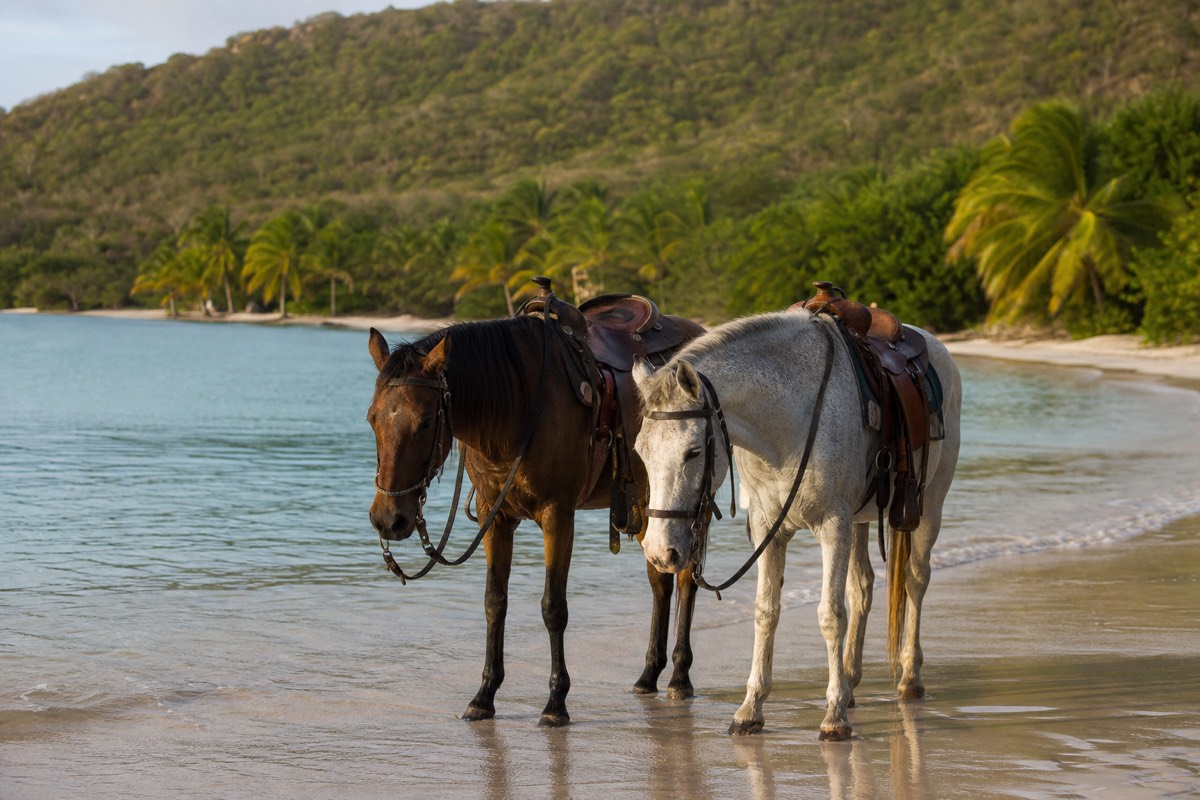
The only two sensible riding windows in a Roatán day
Verified horseback outings are now included in this guide: a ride with a sloth-park and beach stop, and a Big Bight ride with a beach palapa. The published three-to-five-hour or five-hour durations cover the whole outing, not continuous riding. Confirm the exact riding slot, helmets, rider limits and horse-care arrangements before booking.
Does this site sell a Roatán horseback ride?
Verified horseback outings are now included in this guide: a ride with a sloth-park and beach stop, and a Big Bight ride with a beach palapa. The published three-to-five-hour or five-hour durations cover the whole outing, not continuous riding. Confirm the exact riding slot, helmets, rider limits and horse-care arrangements before booking.
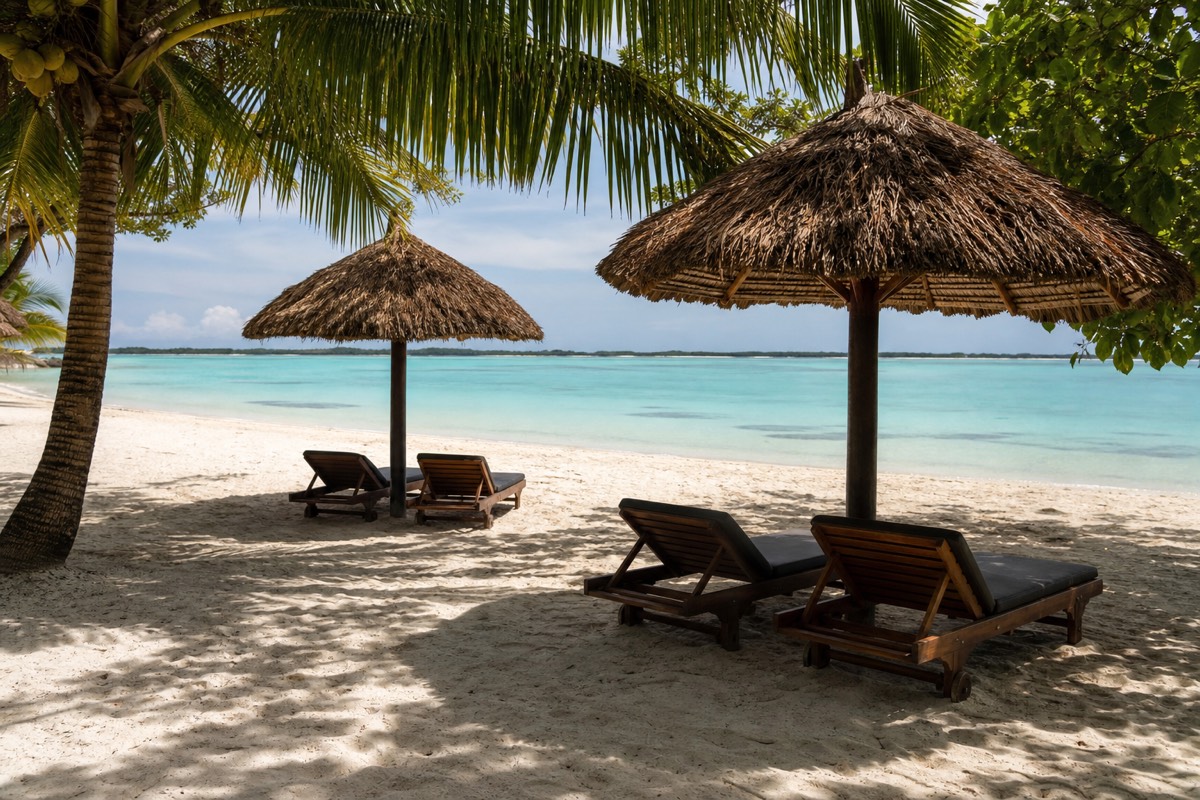
Verified horseback outings are now included in this guide: a ride with a sloth-park and beach stop, and a Big Bight ride with a beach palapa. The published three-to-five-hour or five-hour durations cover the whole outing, not continuous riding. Confirm the exact riding slot, helmets, rider limits and horse-care arrangements before booking.
What we do have is a decade of running land tours on this island in this climate, and that is the part of the problem we can help with honestly.
What is horseback riding on a small Caribbean island actually like?
Two shapes dominate. A beach ride follows the shoreline at a walk with an optional splash in shallow water, and is short, hot, exposed and photogenic. A jungle or hill ride climbs inland on dirt tracks under partial canopy, gives you real views and real shade, and asks slightly more of both horse and rider.
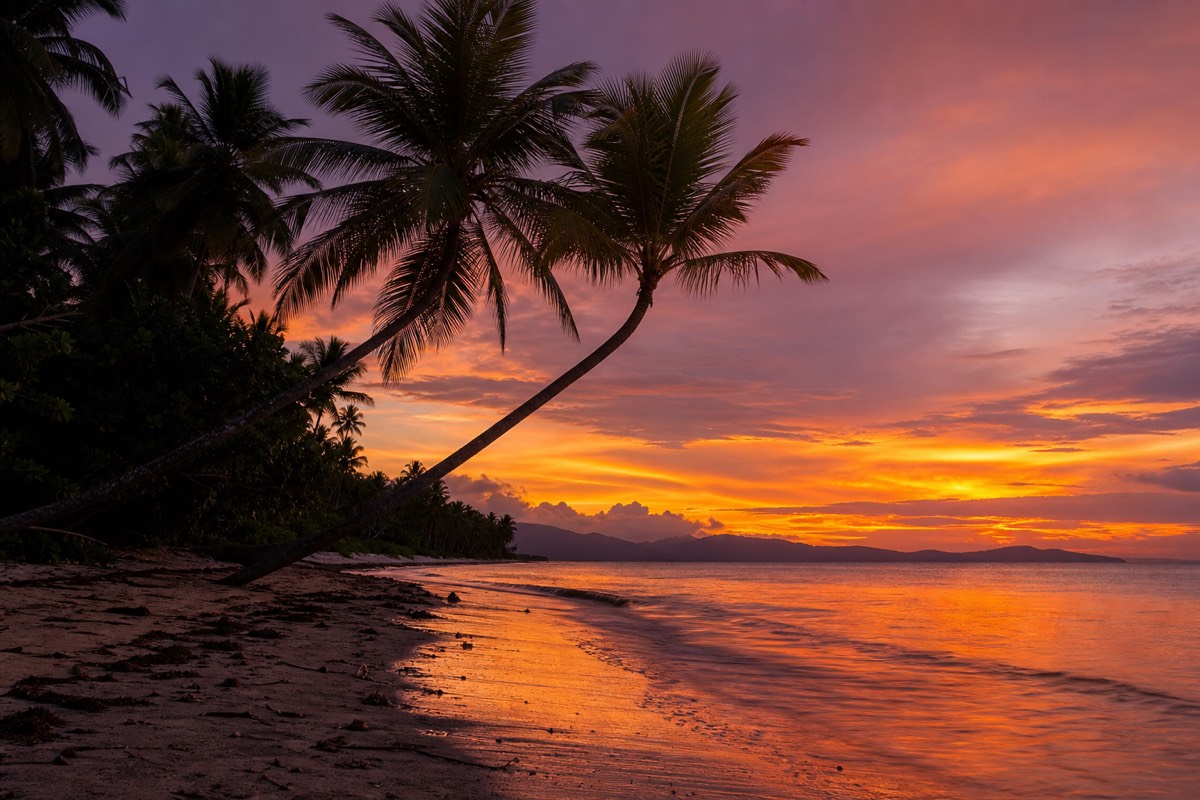
The beach ride is what most people picture and what most operators sell hardest, because the photographs sell themselves. It is also the one where the sun is unrelenting. There is no shade on sand, the reflected glare doubles what your skin takes, and the horses are working in it too. A well-run beach ride is short for exactly that reason, and a yard that offers you two hours on open sand at noon is telling you something about its priorities.
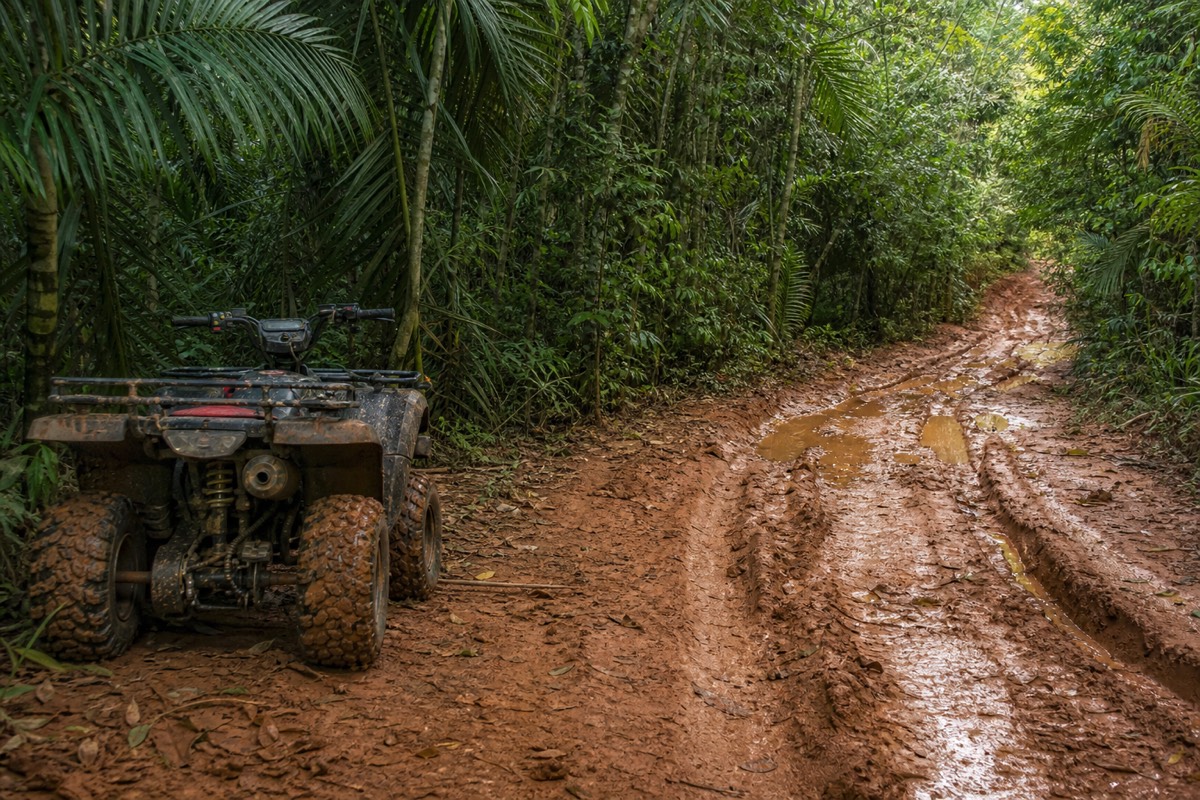
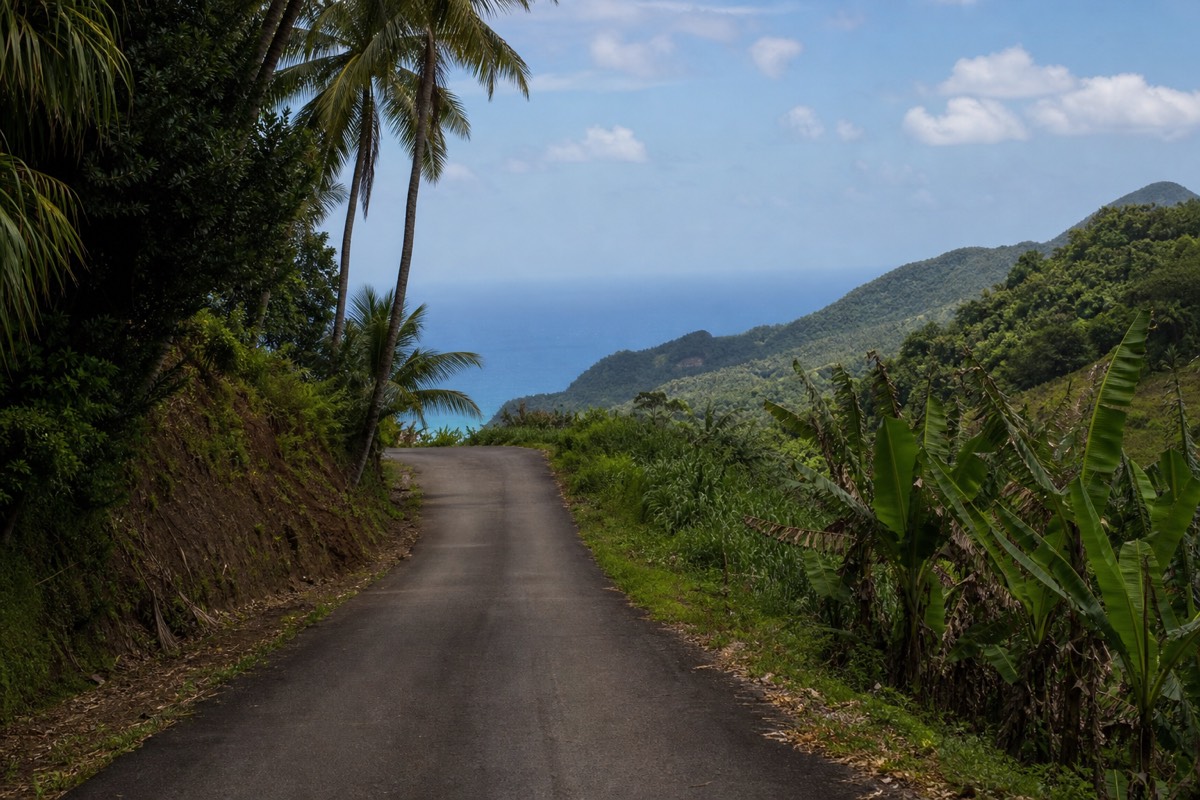
Inland riding on Roatán means the interior ridges, the same broad terrain that the ATV jungle ride with the sanctuary stop covers on wheels: dirt trails through hills, working villages and stretches with the sea visible below. Roads here are paved but narrow and winding, and any trail ride that crosses or follows one puts you in traffic that is not expecting a horse.
Beach ride, jungle trail or hill ride: which do you want?
Choose a beach ride if the photograph and the water matter most and you want something short. Choose a jungle or hill trail if you want scenery, shade and a longer ride. If a yard offers both in one outing, ask which part is longest, because the split is rarely even.
| Ride type | What it is | Shade | Best for | The catch |
|---|---|---|---|---|
| Beach ride | Shoreline at a walk, sometimes with a shallow-water section | None | Photographs, first-time riders, short outings | Full sun on rider and horse, and beaches fill with cruise passengers from mid-morning |
| Jungle or forest trail | Interior dirt tracks under partial canopy | Partial | Scenery, cooler riding, longer outings | Mud and slick footing after rain, and biting insects in the greenery |
| Hill and ridge ride | Climbs to elevated ground with sea views | Variable | Views and a more interesting ride | Steeper ground asks more of the horse, and asks you to sit properly on descents |
| Combination ride | Trail out, beach section, trail back | Mixed | Getting both in one outing | Ask which segment is longest before you assume it is the beach |
One thing that is true anywhere in the tropics: swimming with a horse is a specialist activity, not a default add-on. If a yard advertises it, ask directly how deep the water goes, whether the tack is removed first, and whether they can produce anyone on staff who has done it before with that horse.
Why does the time of day matter more than the trail?
Day excursions on Roatán run in heat around 28 to 33°C with high humidity. That leaves roughly 06:00 to 09:30 and roughly 15:30 to 18:00 as the sensible riding windows. Anything in the middle of the day is hard on the horse first and on you second.
| Window | Conditions | Verdict |
|---|---|---|
| 06:00 to 09:30 | Coolest air of the day, low glare, beaches still quiet before the cruise crowds arrive | The best slot, and the only one that reliably works on a port day |
| 09:30 to 11:00 | Heat climbing fast, humidity high, beaches filling | Workable if the ride is short and shaded |
| 11:00 to 15:30 | Peak heat and peak UV, West Bay at its busiest between 10:00 and 15:00 | Avoid. If a yard is happy to sell you this slot, ask why |
| 15:30 to 18:00 | Heat dropping, golden light, beaches clearing as passengers head back to ships | Very good for a stay on the island, usually impossible on a cruise day |
Rain complicates it further. A light rain jacket or poncho is worth packing from May to October, and the same showers that make the jungle green make dirt trails slick. Our page on the best time of year to visit Roatán sets out how the months differ, and the Atlantic season timing published by the NOAA National Hurricane Center is the wider frame for the wet half of the year.
What should you ask a Roatán horseback operator before you pay?
Six questions cover most of the risk: are helmets available and included, what is the rider weight limit, how many riders per guide, what happens if you are unhappy after five minutes, what insurance exists, and how are the horses kept between rides. A yard that answers all six easily is usually a yard worth riding with.
| Ask this | What a good answer sounds like | What should worry you |
|---|---|---|
| Are helmets available, and are they included? | Yes, in several sizes, at no extra charge | "Nobody wears them here", or a charge for one |
| What is the rider weight limit? | A specific figure, applied consistently | No limit at all, which means the horses carry whatever turns up |
| How many riders per guide? | A small number, with a named guide leading and someone at the back | A large group with one person out front and nobody behind |
| What if I am not comfortable after five minutes? | We swap the horse or walk you back, no argument | Vague answers, or a no-refund line delivered before you have mounted |
| What insurance is in place? | A clear answer about the operator's own cover, plus advice to check your travel policy | A blank look. Adventure activities are excluded from many travel policies by default |
| Where are the horses between rides? | Shade, water, rest days, and they are happy to show you | Reluctance to let you see the yard at all |
| How long is the ride, and how much of it is at a walk? | A specific duration and an honest breakdown | "As long as you like", which usually means as long as the heat allows |
| Is there a minimum age, and do children ride led? | A clear age policy and a lead rope for small children | Children put on adult horses unled |
Pay in cash and get a receipt if one is offered. The island runs largely on US dollars and many small operators do not reliably take cards, which is worth knowing before you arrive with plastic only.
Which welfare signs should make you walk away?
Check four things in the first two minutes: body condition, the skin under the tack, whether water and shade exist at the yard, and how the horses behave when a person approaches. Visible ribs and hip bones, girth or saddle rubs, no water bucket in sight, and flinching at a raised hand are each enough on their own to leave.
| Red flag | What it usually means |
|---|---|
| Ribs, spine or hip bones clearly visible | Underfeeding, parasite load, or a horse working more than it is fed for |
| Bald patches, sores or scabs under the saddle or girth | Badly fitted tack used anyway, and it will not improve during your ride |
| Bit sores, or a bit with no bridle padding on a hard-mouthed horse | Rough handling, and a horse that has learned to brace against pain |
| No shade, no water bucket, no rest area at the yard | Horses standing tacked in full sun between rides |
| Flinching, ear pinning or backing away when a handler approaches | The horse expects something unpleasant |
| Overgrown or badly cracked hooves | No regular farrier, which becomes lameness |
| The same horse going out ride after ride all day | No rotation, which is the fastest route to an exhausted animal in this climate |
| You are not allowed to see where the horses live | Take the answer at face value and go elsewhere |
None of this requires expertise. It requires looking, and being willing to lose a deposit. Our honest position is that walking away from a bad yard is the single most useful thing a visitor can do about animal welfare on any island, because operators respond to bookings and to nothing else.
Why do the 2025 wildlife rules change this conversation on Roatán?
In January 2025 Honduras's ICF issued an official document restricting the over-manipulation of wildlife, defined as carrying and holding animals for exhibition and photographs, with enforcement on Roatán starting 1 March 2025. It applies to wild animals, not to working horses, but it reset what visitors here expect from any animal-based activity.
The practical effect on the island was immediate. Sloth holding stopped. Cruise lines rewrote their Roatán excursion descriptions. Passengers who had booked on the strength of an old photograph arrived to a different product, which Royal Caribbean Blog reported at the time and Cruise Hive covered as the ban took effect. The rules themselves come from the ICF, the national conservation and wildlife authority.
Horses are livestock, not protected wildlife, so nothing in that ruling governs a riding yard. What changed is the conversation. A destination that has just tightened the rules on how visitors touch animals is a destination where asking a stable how its horses are kept is a normal question rather than a rude one. Ask it. If you want the background on how the rules landed, we cover it in the 2025 sloth-handling rule change.
What should you wear to ride when it is 30°C and humid?
Long, thin trousers rather than shorts, closed shoes with a small heel, a helmet if one is offered, and high-SPF sunscreen applied before you arrive. Shorts are the standard mistake: bare legs against a saddle for an hour in humidity produce rubs you will feel for days.
| Item | Take it? | Why |
|---|---|---|
| Long lightweight trousers or leggings | Yes | Protects the inside of the leg from the saddle and stirrup leathers, and from sun |
| Closed shoes with a small heel | Yes | A heel stops the foot sliding through the stirrup. Flip-flops and sandals are unsafe on a horse |
| Helmet | Wear one if it is offered | The single item that changes outcomes in a fall, and many yards in warm destinations do not push them |
| Long-sleeve sun shirt or rash guard | Yes | Better than repeated sunscreen on moving arms, and lighter than it sounds |
| Wide-brim hat | Only if you are not wearing a helmet | Do not choose a hat over a helmet, and secure whichever you wear |
| High-SPF sunscreen and SPF lip balm | Yes, applied before you arrive | You will not want to stop mid-ride, and sand and water reflect hard |
| Insect repellent | Yes | Sandflies and mosquitoes are active at beaches and jungle stops |
| Water | Bring your own | A 1 L reusable bottle is standard kit for any day excursion here |
| Small USD notes | Yes | The island runs on cash for small operators, tips included |
| Swimwear underneath | Only if the ride includes water | Confirm the water section exists before you plan around it |
Health prep for the tropics generally is covered well by the CDC's travel health page for Honduras, including mosquito-borne illness and what to have with you.
Do you need riding experience for Roatán horseback riding?
No for a walking beach or trail ride, which is what almost all island riding is. You do need to be honest about your level, because the mismatch that causes problems is not a beginner on a quiet horse, it is a nervous rider on a forward horse who was told the ride would be gentle.
| Your level | What suits you | What to say when you book |
|---|---|---|
| Never sat on a horse | A short led or closely supervised walk | Say it plainly. A yard that hears "beginner" and gives you a lively horse is the wrong yard |
| Ridden a handful of times on holiday | A walking trail ride with a guide close by | Describe what you have actually done, not what you hope to do |
| Ride occasionally at home | Longer trail rides, possibly some trot on suitable ground | Ask whether faster paces are offered at all before you assume |
| Confident and regular rider | Hill and ridge rides with more varied ground | Ask about the horses' fitness and whether the ground allows anything beyond a walk |
| Riding with children | Led ponies or a very short walk | Ask the minimum age and whether small children are led on foot |
| Nervous but willing | The shortest option available, early morning | Ask if you can meet the horse first and walk a few minutes before committing |
Anyone with a back problem should think hard. An hour at a walk on uneven ground is more jarring than it looks, and it is the same reason the ATV and zip line tours here list back trouble as an exclusion.
How do the seasons change riding conditions on Roatán?
January to April is the driest and most reliable but the busiest with cruise ships. May and November are the value windows. June to October brings the rain that turns dirt trails to mud and makes an early start matter even more.
| Window | Ground and weather | Crowds | Riding verdict |
|---|---|---|---|
| January to April | Dry, sunny, firmest trails | Highest cruise volume of the year | Best conditions, worst beach congestion. Ride at first light |
| May | Dry season ending, warm | Few ships after spring break | One of the two sweet spots |
| June to October | Rainy season, more showers, occasional rough weather | Lowest crowds and prices | Muddy trails, slick footing, but empty beaches |
| November | 28 to 31°C, rainfall dropping sharply, lower humidity | Very low cruise traffic | The best all-round month on this island |
| December | Good weather | Cruise traffic jumps from mid-month | Fine early in the month, congested after |
Our own island copy is not perfectly consistent on which months are calmest, and rather than pick one version we will say what both agree on: January to April is the most reliable weather and the busiest, and November and May are the value windows.
Can you fit a horseback ride into a cruise day?
It is tight and it depends entirely on the yard's location and start times. Ships come ashore around 08:00 to 09:00 and all-aboard is typically 16:30 to 17:30, so the only comfortable riding window on a port day is the early one, and you need transport organised before you dock.
There is no Uber and no Grab on Roatán. Getting anywhere means a taxi, a private transfer, or a rental. Taxis are often fixed price rather than metered and rates are posted at the ports, so agree the fare before you get in. As a reference for distances, cruise port to West Bay runs about $20 to $35 and the airport to West Bay or West End about $30 to $50. A yard further from the port costs more and eats more of your day in both directions.
The practical risk is not the ride, it is the return. Traffic near the terminal slows down as thousands of passengers head back, which is why the standing advice on this island is to be back one to two hours before all-aboard. A ride that finishes at 14:00 with an hour of road between you and the ship is fine. A ride that finishes at 15:30 is a gamble. Our page on how safe Roatán actually is covers the sensible precautions around independent transport, and if you want a comparison of how a structured land day runs to the clock, Roatán's zip line and ATV courses lays out the timings the operators actually use.
Where would you ride, and what else is nearby?
Riding on Roatán happens away from the two main visitor strips, because West Bay and West End are dense with beach clubs, restaurants and day-trippers rather than open land. That means combining a ride with something else in the same part of the island, rather than crossing back and forth.
If a yard sits inland or toward the east end, the natural pairings are the same ones the land tours use: the interior villages and mountain overlooks, the Garifuna east end around Punta Gorda, and the mangrove country near Oak Ridge. Our page on Garifuna culture on Roatán covers that side of the island properly.
If the ride is nearer the western end, the obvious afternoon is the beach. Our full West Bay Beach guide covers where to sit, when it fills and where the quiet sand is. Note the pattern though: an early ride finishing at 09:30 puts you at West Bay right as the crowds arrive, so consider walking further down the beach than everyone else does.
Who should skip horseback riding on Roatán?
Skip it if you have one short port day and have not yet been in the water, if you have back trouble, if you are riding purely for a photograph you have already seen online, or if the only slot available is the middle of the day. Skip it too if the yard will not answer the questions above.
The port-day argument is the same one we make about every land activity here, and it is not false modesty about our own products. The Mesoamerican Barrier Reef runs alongside this island and reaches the shore in places. That is the thing Roatán has that most Caribbean destinations do not, and the Roatán Marine Park exists precisely because of it. You can ride a horse on a beach in a hundred places. If your ship is in for eight hours, our honest read is that the water wins.
The second case is subtler. Riding is a genuinely good way to see an island slowly, but only if you like being on a horse. If what you actually want is the picture, an hour of full sun on an animal you are not comfortable with is an expensive way to get it, and the animal has no say in the matter. That is worth sitting with for a minute before you book anything.
If the answer is that you want a land adventure and horses were only ever one option, the motorised equivalent on this site is the ATV jungle ride with the sanctuary stop, which covers the same interior country, or a broader look at the guided Roatán tours we list if you would rather build the day around water and wildlife instead.